











Covid-19 proved that homelessness could be tackled, says Tim Farron MP. But five years on, more than 132,000 households are still in temporary accommodation - and 74 children have died due to poor housing conditions
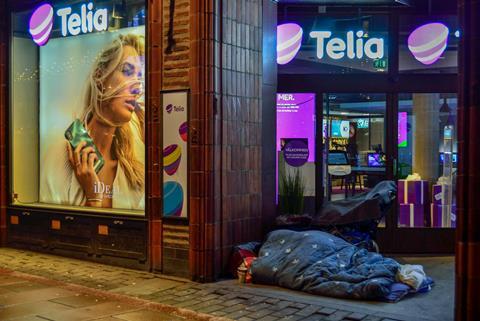
At the start of the Covid pandemic in 2020, 90 per cent of all rough sleepers in Britain were helped into accommodation within a matter of weeks. It was a remarkable achievement. But since then, most have returned to the streets.
In rural constituencies like mine, it’s less visible. There are fewer rough sleepers and most sleep in woods and ruins – out of sight and, to many, out of mind too. But there are also vast numbers of ‘hidden homeless’ – those who are crashing on friends’ sofas, or families being temporarily housed in B&Bs or hotels.
Currently, more than 132,000 households are living in temporary accommodation in England, including 172,000 children. This is hugely expensive for councils and is also often damp, cold, overcrowded and unstable. Families are moved around the country, often sent miles away from schools, jobs and support networks.
Having nowhere to call home impacts your whole life and brings a permanent feeling of insecurity. Your mental and physical health is likely to plummet. There may be no facilities to prepare a meal, or for children to do their homework.
An urgent need
It’s been estimated that 74 children have died over the last five years due to appalling living accommodation. Of those, 58 were under a year old. In 2022, we were shocked by the death of two-year-old Awaab Ishak, who lived in a flat overrun by mould. But what’s changed since then?
We housed people during the Covid pandemic because there was an emergency. Society and politicians agreed that it was urgent - but for those in housing need today, it’s still an emergency. The need is urgent for them.
People become homeless for many reasons. Mainly, they cannot afford a home. There’s a chronic lack of social housing (1.3 million people are currently on waiting lists, a rise of ten per cent in just two years), along with high private rents and housing benefits that don’t keep pace with costs. Private landlords can evict tenants at short notice. People are at especially high risk of homelessness if they are escaping domestic abuse or relationship breakdown; if they are leaving care, the armed forces or prison; or if they are immigrants with no recourse to public funds.
The Government is taking action. It’s set up an inter-ministerial group on homelessness; it’s putting together a homelessness strategy and has introduced a Renters Rights Bill to overhaul the private rental sector. But there are worrying rumours that it is also planning to water down its social and affordable housing targets to appease developers who would rather build expensive houses.
Made in God’s image
These issues should deeply concern us as Christians. As God’s image bearers, each of us is conferred with dignity and value. But those trapped in a cycle of homelessness have that dignity stripped away from them. They feel powerless, valueless and often hopeless.
God challenges us to respond with compassion and, where we can, with personal generosity in our charitable giving. 1 John 3:17 asks: “If anyone has material possessions and sees a brother or sister in need but has no pity on them, how can the love of God be in that person?”
It also raises questions of justice. The Old Testament made detailed provisions for ancient communities to care for those in need. And the early Church distributed funds to ensure, in the words of Acts 4:34, that “there were no needy persons among them.”
Today we have outsourced such responsibilities to government, local councils, housing associations and private landlords – and we must hold them to account. We can do this through contacting our elected representatives, by joining campaigns and supporting organisations such as Shelter and Crisis – as well as Christian charities such as Green Pastures.
Compassionate care
We can also work through our local churches, who are embedded in the community, to understand - and practically and sacrificially respond to - people’s needs. We may not be able to offer accommodation, but we can offer support and care.
Depending on our skills and capacity, perhaps our church can provide hot meals or debt advice, or spaces for children to do their homework. How could we be advocates for homeless people when communicating with local council housing departments and landlords? How might we furnish spaces for people to find the love of God through nurture, warmth and community?
This may feel daunting. In his book Justice for Christ’s Sake (SPCK) Rt Rev James Jones encourages Christians to look outwards, recognise their own influence and ask how God might use it for good.
Jones urges us to: “have a sober assessment of the power that is yours, be it position, influence, wealth, health, time, intelligence, energy or simply life itself, and consciously share it with those whose existence could be less deprived if you were honest about your influence and determined to use it for their benefit.”
So, as we pray about the – often hidden – homelessness in our communities, let’s ask God to show us how we can hold to account those in authority, and also how we might make small differences ourselves.
And let’s be challenged and encouraged by Jesus’s words in Matthew 25 that “whatever you did for one of the least of these brothers and sisters of mine, you did for me”.
























No comments yet