



A variety of Christian leaders share their personal experiences of communing with God and offer fresh ideas on how to boost your prayer life in 2026
‘I nearly died. It changed everything – including how I pray’
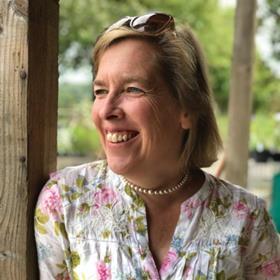
Prayer always seemed like something other people were good at. My mother’s life was steeped in prayer, and it was easy to subcontract my concerns to her. I felt as confident in prayer as a celebrity exiting Strictly in the first week.
That has now changed.
Last year, I became catastrophically ill. My immune system attacked my lungs, making it virtually impossible to breathe. I spent 64 days in hospital, 43 of them in intensive care. I nearly died on two occasions. I was on life support. I couldn’t breathe unaided, speak or move. Sustenance came via a tube.
Lots of people were working very hard to give me the best chance at a future: medics, friends, work colleagues, neighbours. People were feeding my cat, checking my house and visiting me. Many people were also praying, and I was buoyed by that.
I wanted to do something for them in return – and the only thing I could do was pray.
Previous attempts at prayer saw me largely going through a list of worries and concerns with God. Oddly, that wasn’t what happened in intensive care. Praying for the needs of others felt like a rebalancing: a way I could give back and care for those who cared for me.
I suffered from insomnia in hospital so, after about two hours’ sleep, staff would wake me at 6am for an hour of generally unpleasant tests. But at 7am, I could lie quietly and pray, reflecting on God’s love, sometimes on passages from the Bible, but often just being in his presence.
This gave me a sense of serenity that was out of sync with my circumstances. I’ve never experienced anything like it. I was filled with gratitude simply to be alive.
Of course, I prayed for myself too, and I prayed for outrageous miracles. At this point there was no sense that the inflammation would go down, potentially leaving me with badly scarred lungs and in need of permanent care. I prayed that wouldn’t happen.
Later that year, I visited a specialist who showed me before and after scans. “We don’t normally see anything this bad,” she said, “and we don’t normally see anything this good.” There is no inflammation now, and the scarring is ‘residual’.
Since returning home, I’ve retained that quiet hour, though now, thankfully, in my own bed with a cup of tea and the cat. The sense of gratitude continues, for small things that would have gone unnoticed before, like the view from my window, being able to walk and the sound of birdsong.
When I was in hospital, I couldn’t move at all, let alone hold a phone and scroll on social media. So now, when I catch myself doom-scrolling, I put the phone down and give my busy soul to God. It’s also enabled me to look at other dead times – such as a train journey or waiting for an appointment – as opportunities for stillness and reflection.
The insomnia also came home with me and so, in the night, I still pray for the people I care about and, a new challenge, relationships or circumstances that I find frustrating or irksome.
Health-wise, I’m not out of the woods. The condition will always be with me, and I’ll need medication forever to stop a repeat performance. But I have extra time to live in – and one thing I can do with it is pray, confident that God doesn’t mind how I express myself. He just wants my company.
Hazel Southam is a freelance journalist
7 lessons from a lifetime of prayer
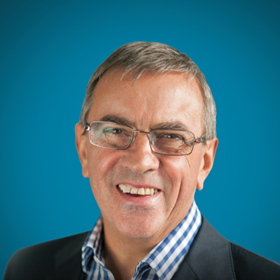
I am hesitant to share any insights I have gleaned about prayer because I have often felt disappointed in myself at how hard I find it.
Nevertheless, my prayer life was changed when I started listening to what Jesus said about prayer in Matthew 6. Prayer had ceased to be a priority for me, and I had all but stopped. I had become discouraged because, try as I might, I simply couldn’t pray for the length of time that others seemed to manage.
One day I read these simple instructions, as though I had never seen them before: “When you pray, go into your room, close the door [I think the modern equivalent is “turn off your mobile”] and pray to your Father” (v6). Jesus said that the length of my prayer – “many words” (v7) wasn’t the most important thing to God. As I read, it was as if I received for the first time a gift I had possessed almost all my life: “This, then, is how you should pray: ‘Our Father’” (v9). That has become a lifeline to me. I pray it every day. Sometimes when I feel apprehensive about the day ahead, or unworthy to be a follower of Jesus, I whisper it in the darkness and I am comforted.
My next lesson may not seem all that insightful, but I have come to believe it essential: I just do it. Almost every morning, I pad downstairs, make myself a cup of tea and go into the living room. I might be there for a short time or longer, but I have learned that the daily habit matters: the smartest man who ever lived took time to pray in secret, and I would do well to imitate him.
If my mind wanders, I pray about whatever it’s wandered to
Thirdly, and because I so often find it hard to find the right words to pray, I use the gift of liturgy. I kneel and recite the whole of Psalm 150, which begins: “Praise the Lord…let everything that has breath praise the Lord. Praise the Lord.”
My fourth lesson involves hauling myself up from my knees and reading a little of the Bible as I sip my tea.
My fifth lesson is to use a list – people and situations, friends who are ill, nations at war and family issues. Sometimes I get bored with it, and I imagine God even getting bored and saying: “I know the list!” Yet it means that some people have at least one person who prays for them every day.
My sixth lesson I got from a wise friend: if my mind wanders, I pray about whatever it’s wandered to.
My seventh is to pray prayers that may only last seconds throughout the day. Before I start driving, I say a short prayer; when I get into my office I commit the day to God; whenever I see an ambulance, I say: “Lord, I commit those involved to you.” I was once feeling guilty about asking for God’s help in some small matter and I felt him say to me: “I am your Father – if it matters to you, it matters to me.” And time and time again I pray for wisdom.
Let me end with a couple of lines from that great theologian, Johnny Cash. “I talk to Jesus every day and he’s interested in every word I say / No secretary ever tells me he’s been called away / I talk to Jesus every day.”
Me too, Johnny.
Rob Parsons is the founder of Care for the Family, an international speaker, author of more than 25 books and a former Premier Christianity columnist
Learning to be still
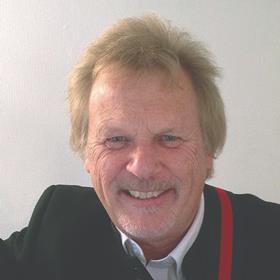
I love praying in the open air. It may surprise some, but I find it easier to concentrate while listening to the sound of the sea crashing, the wind blowing or the birds singing than the sound of worship music.
In some ways, growing up in a lively charismatic church suited my personality – but in later years, when God guided my wife, Irene and I to Chichester Cathedral, I found the quieter, traditional form of service very refreshing.
At first, I felt strangely out of my comfort zone. I’d spent many years being taught by some of the best Bible teachers. But I can’t remember anyone telling me that evangelists must make time for silent prayer and meditation. For me it was all about seeing people saved, non-stop touring, preaching and singing. Now I know why God led me to the cathedral. It was time for me to learn to be still and silent before God.
A few years ago, I was diagnosed with acute myeloid leukaemia. I was told that without immediate treatment, I would be dead within days. I had just been ordained and welcomed into the cathedral clergy team. Being unaware of their views on prayer for healing, I wondered if I’d jumped ship to the Anglo-Catholic Church too soon.
However, I needn’t have worried. From day one, the bishop and clergy were at my bedside anointing me with oil, giving me communion and pleading fervent, faith-filled prayers for my healing.
When I was at my worst and uncertain if I would live, I prayed: “Lord, if you allow me to live, I promise I will write a book telling everyone what you have done for me and how you answer prayer.”
I also said: “Lord, if you keep me alive, I promise I will tour the country with a new concert and share what God has taught me through this extremely painful experience.” Perhaps it was wishful thinking. At the time I didn’t even have the energy to walk to the bathroom, never mind tour the country!
I was so grateful to know people all around the world were praying for me. And God answered those prayers. I knew I must keep the promises I made to him.
It took me twelve years to write down all I had been through but recently, Irene and I published Our Cancer Journey. We also visit churches with my testimony concert, in which I share how prayer helps us through difficult times.
Life’s trials don’t stop. A couple of years ago, I suffered a stroke. I know it was prayer that miraculously got my brain, voice and guitar fingers working together again – and got me back on the road doing what I love best.
Ishmael is a singer songwriter, author and deacon at Chichester Cathedral. To buy his latest book, Our Cancer Journey, or enquire about inviting him to your church, visit ishmael.org.uk
Don’t be lazy
My ‘set’ time for prayer is when I get up, but only really because I’ve never managed to find a better option! I am not good in the mornings, but I have found that if I don’t have a focused time of prayer first thing, the day gets away from me and I never quite manage it. That said, I pray fairly continuously, having a conversation with Jesus throughout the day.
I live in a large vicarage, and so I have a dedicated ‘prayer room’, which is an amazing blessing. It’s a lovely, peaceful space without other distractions of life and work.
As a Church of England vicar, I start (almost) every day with a service of morning prayer from The Book of Common Prayer’s daily office. It’s a rich and beautiful diet of liturgy, set Bible readings and time for intercession. I sometimes also say evening prayer but, more often, I say compline, which in some Christian traditions is the last prayer of the day, said before bed.
Prayer is the way I share my heart with God. It’s one way I receive his guidance. As a younger Christian, I had a tendency to feel guilty about prayer – that I wasn’t doing it right, or enough. But it has become easier, richer and more natural as I’ve come to see it as a gift instead.
I’ve also moved from viewing prayer as transactional to more relational. At one time, I think I saw prayer as one enormous list of things to ask God. Those things might be for myself, the people I love, the Church or the world. I would carefully name each one, and perhaps even tell God what I thought he should do about them. Don’t get me wrong, I still name people and places that are on my heart before God. But I now have more of a sense of sitting with God, holding it there between us, rather than telling him what to do.
Today, my prayers have far fewer words, because some things feel beyond words. That’s why praying in tongues is also part of my practice. But sometimes a whole torrent of my unfiltered thoughts and feelings pour out! And I think both of those are OK.
Rev Kate Wharton is vicar of St Bartholomew’s Church in Liverpool, a member of General Synod and a trustee of St Mellitus College. She is the author of Single-Minded (Monarch Books)
Don’t be lazy
Because I have a young family, I find that praying works better at night when the kids are in bed. I also do a lot of transatlantic flights, so I make those six or seven hours times of prayer. But honestly, I don’t pray enough. I wish I had more time to pray.
If anyone had an excuse to not pray for long, it’s Jesus. But he spent eight hours a day in prayer [see Luke 6:12]. I’m not against short prayers, because Jesus prayed those too – but they were based on long prayers. For example, he went to Lazarus’ grave and said: “Father, I thank you that you have heard me” (John 11:41, my italics). That means before he got there, he was praying. Mark 1 tells us Jesus would often wake up a great while before daylight and go to a “solitary place” (v35) to pray. Those were not five-minute prayers!
If Jesus, the perfect man who never sinned, prayed that much, who are you to think you’re OK with two minutes? It’s spiritual laziness. We spend hours on Instagram, Facebook, TikTok and Netflix, but can’t spend time with God. People say: “It’s about the quality, not about the quantity.” I have some strong words for them: “Why don’t you say that to your spouse? Would a quick five-minute conversation sustain your marriage?” No.
Look at all the people God has used to shape the Church and impact nations. They valued communion with God. It’s a Western ideology that just wants two minutes and then we’re out. You don’t get good results if you go to the gym for two minutes. You have to apply yourself.
I don’t say these things to make people feel guilty. It’s just the reality. If we want to be strong in faith and in the Spirit, we have to spend time with God. I know you have to navigate life challenges, family and commitments. I get it. But you can’t create a theology around your laziness.
James Aladiran is the founder of Prayer Storm (prayerstorm.org), which gathers people from across the UK to fast and pray for the nation, believing God for a spiritual awakening. He was speaking to Sam Hailes
Turn the battle
Prayer has been central to my walk with the Lord since I was a teenager but over the years, it has changed in form and depth.
These days, I find myself praying both spontaneously and rhythmically. Set times each morning with my wife, Esther, and an awareness of God’s presence throughout the day. Prayer isn’t something I do only in a ‘quiet time’, it has become a conversation throughout the day.
I often pray the Bible, letting scripture shape my prayers. Some days I pace the floor, other times I sit in silence. I use tongues, written lists, spontaneous song and sometimes tears. The focus changes: personal intimacy, family needs, wisdom for decisions, revival, nations. I’ve learned that prayer is less about getting the words right and more about being real with God.
I’ve seen many answers to prayer – lives changed, people healed, provision come in miraculous ways. But I’ve also learned how to persevere when the answers delay. In the early days, I used to wrestle with the tension between God’s sovereignty and my responsibility. Do I really need to pray if God already knows? But I’ve come to realise that prayer draws me closer, aligns my heart with his and activates heaven’s will on earth.
A few months ago, I was listening to a worship song based on 2 Chronicles 7:14. As the line “If my people…will humble themselves and pray” played, I began to weep for the UK. I sensed the Lord say: “The battle is at the gate – and it can be turned in the place of prayer and fasting.” Since that moment, I’ve carried a weighty conviction that this is a critical hour for the Church. Isaiah 28:6 speaks of those who “turn…the battle at the gate”. I believe that invitation is for us, now.
That’s why from 21-23 January 2026, I’m joining with networks, denominations and leaders across the Church for three days of united prayer and fasting under the banner Turn the Battle. It’s not a conference. It’s a call to consecration, bold witness and collective intercession. If ever there was a time to gather in prayer, it’s now. I believe we’ll see God move in homes, churches and the nation. Will you join us?
Sign up at turnthebattle.uk
Steve Uppal is the senior leader of the All Nations Movement, which is a growing family of churches and ministries. Steve and his wife, Esther, lead All Nations Church Wolverhampton
Prayer is portable
In my busy life, I have found it helpful to start each day by committing myself to the Lord – body, soul and spirit. To confess my sin and ask for his cleansing and filling with the Holy Spirit. To pray that he will transform my mind and heart and help me follow him more willingly. I thank him for the armour of God and put it on (Ephesians 6), and finish with the Lord’s Prayer.
During the day, things are less formal. Prayer is not dull or lifeless at all – as with any fulfilling relationship, the investment of time and intimacy is rewarding to both parties. Amazing as it is, the God of heaven and earth aches for each of us to choose him and to fellowship with him.
I have learned that listening is key. The Lord shares with us when we make room. I have only once heard the audible voice of God, but I ‘know with my knower’ when I deliberately check in with the Lord through the day. It’s so exciting to trust in the Lord in this way and brings fulfilment, favour and fun.
Another practice I find helpful is praying with the word of God. There is no limit to the richness and wisdom of scripture, and taking time with a passage richly feeds me.
Praying with others is encouraging and dynamic. I am quite shy and struggle with praying aloud, but the key has been to learn that God wants me to be myself and each of us is different.
At present, I am aware of God’s call to fasting, that it releases time for intercession, brings a deeper intimacy and spiritual breakthrough.
John 15 is one of my go-to Bible passages. Jesus says: “If you remain in me and my words remain in you, ask whatever you wish, and it will be done for you. This is to my Father’s glory, that you bear much fruit, showing yourselves to be my disciples” (v7-8). As we abide in him, the Lord inspires us with the prayers that he longs to answer in a breathtaking holy partnership. The many, many answers to prayer are his gift and to his glory!
Miggs Clark is head of prayer for Premier. She is part of a new series of online prayer gatherings entitled United, which sees participants come together online to pray for the renewal of the UK. Visit premier.org.uk/united for more information
Prayer beads
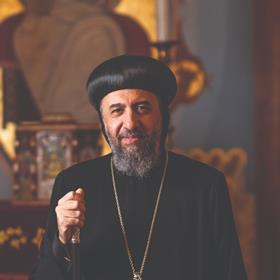
For Coptic Orthodox Christians, prayer is structured in a liturgy book – when we get together and use the Book of Daily Offices – and sometimes it’s very spontaneous. It could be within a group, or on your own while you’re driving or walking.
I tend to pray early in the morning before everything starts. It is a good way to filter through what happened the day before and prepare oneself for the day to come. It makes a huge difference. Life is very fast and very demanding. You have to be careful to keep your ministry prayerful, otherwise it just becomes demanding and burdensome.
One well-known monastic practice is that of the Jesus Prayer: “My Lord Jesus Christ, Son of God, have mercy on me.” It can be repeated over and over. I also tend to always have prayer beads. The idea is that it incorporates all the senses – and our sense of touch is so important. It allows us to transcend the settings we are in and engage in prayer even when we’re in the busiest places. It isn’t structured like a rosary with set prayers – it’s just a way of counting prayers.
I see answers to prayer all the time. I’ve seen things happen to people that were totally unexpected. But I also deal with people daily who feel a huge disappointment because they want a particular answer to prayer and it doesn’t happen. That’s something we need to navigate more, because it can be painful if we have our own expectations and demand things of God. When they don’t happen, you can have feelings of abandonment or rejection or just being forgotten. We need to grapple with that.
Archbishop Angaelos OBE is the Coptic Orthodox Archbishop of London and is the official representative of Pope Tawadros II to the UK. He was speaking to Sam Hailes

















No comments yet