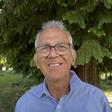

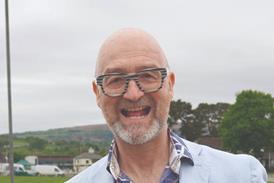


From childhood faith to the challenges of an undiagnosed autism, Robert Noble reflects on discovering his neurodivergent wiring was a God-given strength and a reminder that every kind of mind has a place in God’s kingdom
I was seven years old when I became a Christian. Miss Tucker, our Sunday School teacher and a retired missionary, told vivid stories of her years in China — stories so rich that they unfolded like movies in my imagination. She spoke of Jesus not as a distant figure, but as her closest friend, someone she trusted completely. I wanted that same friendship.
I remember feeling his presence as something real and reassuring. My favourite Bible story was the one where friends lowered a man through a roof so Jesus could heal him. I was inspired by this story and other stories about Jesus.
Seventy years later, my faith has only deepened. People often tell me, “Every Christian has their doubts.” But I never have. My trust in God has been constant, even in times when I felt different, misunderstood, or alone.
From an early age, I knew I wasn’t like other children. At school, teachers called me lazy and disruptive. I was humiliated for not being able to read quickly or tie my shoelaces. Crowded places overwhelmed me, and though I had a few close friends and my faith, I struggled to connect with most people, even within my own family. This form of mild but still difficult autism was not recognised until decades later.
The customer is always right…behind you
My life took a new direction in 1974, during the January sales in London. I worked in a large furniture store, one of 30 eager salespeople competing for commissions. I was given an assistant named Roger, a university student full of energy and ambition.
Although I was meant to train him, it soon became clear that Roger was training me. He noticed how nervous I was around customers. He found out that I have a love of acting and shared the advice, “Think of the Antique Department as your stage — you’re the lead actor, and the customers are your fellow cast members,” and I followed.
Then I began to see sales as a performance rather than a confrontation, my sales soared. Roger helped me realise something profound: I wasn’t broken or inadequate — I was simply wired differently. At the same time, a young Curate came to lead the Harrods Christian Fellowship. His name is Sandy Millar, later known from the Alpha Course with Nicky Gumbel, Sandy had a great influence and my faith moved to a new level.
Years later, I was formally diagnosed as autistic and later with Attention Deficit Hyperactivity Disorder (ADHD). Those labels didn’t define me; they explained me. For the first time, I understood why I had always felt out of step with the world and why I experienced life so intensely, struggled with social cues, and found solace in structure and focus. The diagnosis brought both relief and a renewed sense of purpose.
My Christian life on the spectrum
My faith has always been the thread that holds everything together. The words of Psalm 139 became deeply personal: “You know me inside and out.” I came to believe that my autistic wiring was not a flaw but a facet of God’s design. The very traits others once saw as weaknesses — my focus, honesty, attention to detail, and passion for certain causes, were gifts God could use.
I was formally diagnosed as autistic and later with Attention Deficit Hyperactivity Disorder (ADHD). Those labels didn’t define me; they explained me.
This understanding reshaped my ministry and my outlook on the church. I began to see that the body of Christ is made up of many kinds of minds and hearts, all essential to his work. The church becomes richer, more compassionate, and more complete when it embraces neurodiversity. Not everyone experiences worship, community, or faith in the same way — and that’s a beautiful reflection of God’s creativity.
In my book, I share how autism has not been merely something to “cope with,” but a channel through which God works powerfully. Over the decades, my lifelong commitment to helping children overseas has often been accepted by me as an obsession, but I also see it as a calling. My faith, my wiring, and my purpose are all interwoven.
For me, the message is clear: every Christian, neurotypical or neurodivergent, has a unique role in God’s kingdom. We are all created intentionally, each with our own gifts and ways of serving. And when the church truly embraces that truth, it becomes a place where everyone belongs, just as God intended.
For more of Robert Noble’s story, see his recently released book: I Am Autistic Get Me Out Of Here!
This article sits alongside a wider feature exploring how church isn’t always easy for neurodivergent people and those living with mental health challenges. Read it here.