












Following the Shawn Bolz scandal, now is a good time to reappraise the biblical meaning of prophecy, says Dr Claire Williams
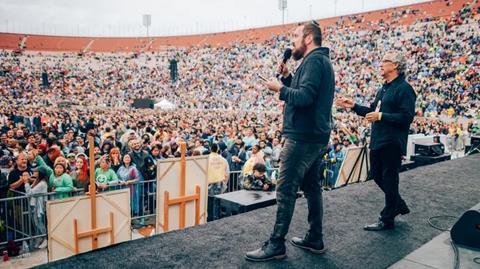
Prophecy is in the news at the moment as the Shawn Bolz episode casts a pall on both his own ministry and on Bethel Church. The allegations that words of knowledge were formed around information gleaned from social media harvesting reveals not only deceitful practices but a misunderstanding of the general thrust of the Bible’s view of spiritual gifts.
The whole episode has raised hard questions for those who believe charismatic gifts are available today, but in my work as a theologian I’ve come across some possible answers that suggest we should be looking at prophecy very differently.
The changing nature of prophecy
Prophets and prophecy in scripture varies, there is no standard example. In the Hebrew Bible prophets were individuals such as Jeremiah, Isaiah, Amos and Hosea. They were called by God to pronounce judgement for sins and proclaim God’s righteousness. They often lived quite difficult lives and their messages were not received favourably by those to whom they were sent. Jonah did not want to be a prophet and he certainly did not want to tell Ninevah that unless they changed their ways they would suffer God’s punishment. Prophets were delivers of messages from God, they spoke to large groups like nations, or their representatives, like their Kings and they highlighted the plights of the poor and the oppressed. I find them most similar to justice campaigners in modern life.
Then, another version of inspired speech occurs in the New Testament. Here, following Pentecost, all believers are empowered to speak by the Spirit. All who were at Pentecost, and Charismatics and Pentecostals believe, believers since as well, are given the gift of the Spirit for the good of the church and for those not yet in the church.
In Acts 2, the words of Joel are given again to the church in light of this new phenomena. The Spirit would be poured out on “all people” - young and old, slaves and women. The gift of the Spirit had a levelling effect – it was available to empower all, in varieties of ways, to participate in the new life that God had to offer.
So the first key idea is that prophecy is one among a number of gifts that is available for everyday Christians. It is not the privilege of those on platforms, and it does not make anyone special or particularly revered.
The centrality of love
Paul writes of prophecy as one of several ways we speak inspired by the Spirit. For Paul, there are individuals who have a special and specific gift of prophecy. This may start to sound more like the gift that ‘famous’ Christians have which sets them apart. Yet Paul’s understanding of prophecy is, in 1 Corinthians, something that is relativised by love. Prophecy is to build people up and give encouragement. Paul’s argument is that if a prophet is not filled with love, their prophecy is meaningless.
Anyone who speaks in the power of the Spirit in a church and causes chaos and disorder is condemned by Paul. It is interesting how the litany of stories of abusive ‘prophets’ recently have something in common, they have caused chaos and they have not behaved in a loving manner for the benefit of the church’s worship. They also do not appear to follow Paul’s view in 1 Corinthians 14 about loving prophecy that is held by the community, interpreted and weighed, and is for the purpose of careful discernment, which is also a gift.
Finding the unheard voices
Prophecy has another feature, a critical one, that we often forget. And that it is the voice of the voiceless and power for the powerless. This is particularly apparent for women in the history of the church. From Hildegard of Bingen and Julian of Norwich to the modern day there have been women who were able, in the power of the Spirit, to speak wisely and significantly about God in situations where they would usually not be heard.
In the Bible we see Elizabeth, the mother of John the Baptist, do this when she recognises the not-yet-born Jesus and proclaims his coming. Likewise, a little further on in Luke’s gospel we see Anna, old and frail and quietly praying in the temple speaks unknown words over the same newborn. Prophecy is also an ability to speak when before there was no way to be heard. The Church would do well to notice the unseen and listen to the unheard voices in their congregations and communities as well as those who have international platforms.
Learning to discern
The Bible does not offer a checklist for weighing and testing words from people but Paul does suggest that we exercise discernment.
One way in which we can exercise discernment is by mapping onto scripture the behaviour of modern day prophets and checking whether we think they are behaving as prophets should.
Prophecy is not supposed to be used to platform individuals to make them famous. In fact, in church history and today, prophecy alongside other speech gifts (like speaking in tongues) offers a voice to the voiceless and speaks truth to power about oppression and injustice.
If a public ‘prophet’ is not behaving in this way, they cannot truly be called a prophet, and their words should carry no authority in our churches.























No comments yet