





In Iran, following Christ still carries risk and access to the Bible can come at great cost. But as signs of change begin to emerge, Dirk Smith says the Church must be ready for a moment that could place God’s word within reach of millions
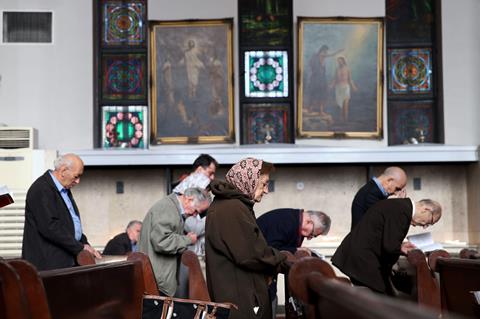
In Iran, following Christ can still mean secrecy, fear and real personal risk. Believers gather quietly. Scripture is passed from hand to hand. Even owning a Bible can carry consequences many Christians in the West have never had to imagine. For years, Christians in Iran have lived and worshipped under that pressure, often reading God’s word behind closed doors.
What may be emerging in Iran is not merely political change, but the possibility of a historic opening for the Bible – I believe millions could suddenly be free to seek it, read it and hold it without fear.
For more than six decades, we have worked in places where access to the Bible could never be taken for granted. EEM was founded in 1961 to get scripture behind the Iron Curtain at a time when Communist governments were trying to keep God’s word out and the Church quiet. What began in that era has grown into a ministry serving more than 35 countries in more than 30 languages, and in 2025 alone, we helped put more than two million Bibles into people’s hands.
A moment that could change everything
We have already been serving Christians in Iran and have printed almost 90,000 Bibles for different age groups in the main languages spoken in the country, including Arabic, and we continue to publish and distribute scripture for Iranian and Persian-speaking diaspora communities. We have also printed the New Testament in Gilaki for people in northern Iran who have never had the full New Testament in their own language.
For years, Iranians have encountered the Bible only at great personal cost. A different future could place that same word within reach of millions.
But if Iran changes, what we have done so far may prove to be only the groundwork. For years, we have known that if the door ever opened, even briefly, the need for Bibles could surge overnight.
We have seen this before. When the Berlin Wall fell, access to scripture in parts of Eastern Europe suddenly changed. The question was no longer whether people wanted the Bible but whether the Church was ready to place it into their hands quickly enough.
We learned then that when freedom comes, hunger for the word of God can be immense, and that doors do not always stay open for long.
The same pattern was repeated more recently in Ukraine. As war brought suffering and uncertainty, many began searching for hope, and churches asked for scripture in unprecedented numbers. Ministries that were prepared were able to respond quickly.
Readiness.
The need inside Iran is not hypothetical. It is already there. One story captures it. A young Iranian refugee who had fled his country arrived in Greece searching for a Bible in his own language. “We heard there were Bibles here in our language, and we had to get a copy,” he said. That encounter set him on a new path. Today, he serves in Christian ministry and sits on the board of the Greek mission that first placed scripture in his hands. A single Bible can change the course of a life.
Multiply that moment by millions, and you begin to see what is at stake. None of this removes the need for prayer. Iran remains a country marked by uncertainty, and Christians should be praying for peace, for protection, and for true freedom for its people. But prayer is not the only response required.
Scripture calls us to pray for a door that makes way for the word and to be ready when it opens. That is the responsibility for the Church now. Not speculation. Not complacency. Readiness.
For years, Iranians have encountered the Bible only at great personal cost. A different future could place that same word within reach of millions.
As Christians, we must not let such a moment pass.