









Growing up, Jamie Sewell inherited a fierce Irish Catholic identity from his grandmother, along with a disdain for the Church of England. Now, to his great surprise, a vicar in the CofE, he reflects on division, unity and why our identities are a gift, not a weapon
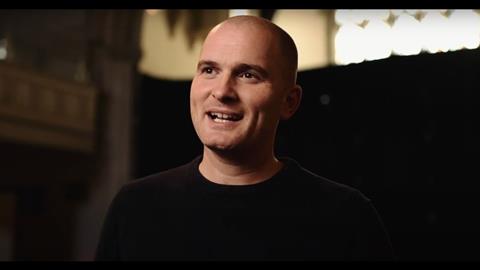
I grew up in Rugby in the Midlands, but my sense of identity was never rooted there. It was rooted in the stories of my grandma. Every school holiday we’d travel up the M6 to Kirkby, Liverpool, one of the first council estates built in the city, home to generations of Irish Catholic immigrants.
To outsiders, Kirkby had a rough reputation. To me, it was a place of beauty: a warm, close-knit community with the Catholic Church at its centre. Even now, I think that’s where my vision for Christian community began. My grandma would sit my brother and me down and tell stories of our ancestors, of those displaced during the potato famine, of the struggles and joys of being part of the Irish travelling community.
If you’d asked me back then where I was from, I’d have proudly told you I was Irish, despite never setting foot in Ireland.
A crisis of belonging
My grandma was a magnificent storyteller, but she wasn’t just preserving history; she was teaching ethics. Through tales of famine, migration, and prejudice, she taught us about the cruelty humanity is capable of when faced with difference.
Her stories connected the Irish Catholic and Irish Traveller struggle with those of other oppressed groups. She told us about Martin Luther King, Rosa Parks, Muhammad Ali, Malcolm X, Gandhi, and Nelson Mandela, not to claim their experiences were the same, but to show the wickedness that takes root when we “other” one another; when we decide that our differences are too great to bear. And the heroes that persecution creates.
She would recall seeing signs on pub doors as a child: “No Blacks, No Irish, No Dogs.” Those words struck something deep within me. Growing up, that romanticised sense of being the ‘other’ shaped me. The “enemy” was easy to identify: the white middle-class, the posh kids walking back to their dorms from Rugby school, and, above all, the Church of England.
My grandma called them “Proddy Dogs.” And I inherited her disdain. I had what you might call inverted snobbery. I longed to side with the oppressed, to join the struggle, to define myself against the powerful. In my youthful imagination, that’s what righteousness looked like.
When I finally visited Ireland, I remember feeling oddly deflated. I realised, standing on that beautiful soil, that I wasn’t Irish at all. I was English. I’d built my identity not on experience or birthplace, but on a story, one that made me feel part of something brave and persecuted. That realisation was unsettling. But it was also freeing.
The greatest shock came much later, after I’d found Christ. I was in my mid-thirties when I started working closely with Church of England bishops on mission projects around London. To my horror, and delight, I was inspired by them. It was a strange thing, to be drawn toward an institution I’d been raised to despise. For me, the Church of England wasn’t just “different”, it was the enemy. Yet the more I worked alongside its people the more I saw Jesus in them.
After two years of collaboration, I sensed an unmistakable call: to become a Church of England priest. The day of my confirmation remains one of the most conflicting days of my life, not because I doubted the call, but because I still saw myself as Catholic.
The New Othering
Today, our nation feels like a tinderbox. Every headline seems to spark another explosion of anger, over race, religion, gender, or ideology.
Everywhere we look, people are fragmenting into smaller and smaller tribes, each convinced that they alone hold the moral high ground. And the Church isn’t immune. We see Christians othering one another over everything from Brexit to border control, sexuality to social policy.
But here’s my fear for the Church: when we define ourselves by moral superiority instead of mercy, we forget the gospel. Of course truth and justice matters, profoundly. Jesus is not a mascot for vague tolerance. He sets the standard of holiness and justice that we must wrestle with. But we can’t confuse conviction with contempt.
It’s possible to passionately hold beliefs about border control, marriage, immigration, or the NHS, and still listen to those who see things differently, not because we think all views are equal, but because we know all people are precious. That’s what it means to be the Church: to hold difference and dignity together.
When I listen to people I disagree with, I often find that even when I reject half of what they say, the other half teaches me something.
The only thing strong enough to hold us together as a people is Jesus. The only way to the Father is through the Son, and the only way to true peace is through unity in him. It is the cross that unites us. At the foot of the cross, there are no tribes, no factions, no moral hierarchies. There is only mercy. It’s there that we learn what it means to love the neighbour, the stranger, even the one who disagrees with us or offends us.
As we kneel before the cross, we are confronted by our own sin, our moral blind spots, our pride, our need for grace. It’s there that we realise we are not the morally superior ones, but the forgiven ones. It’s also there that compassion begins to grow.
This doesn’t mean we abandon moral conviction or open every border or dilute the truth. It means we begin our moral thinking from the place of humility, not superiority, from the awareness that we, too, are flawed and broken in ways we can’t fully see.
When I listen to people I disagree with, I often find that even when I reject half of what they say, the other half teaches me something. It sharpens me, challenges me, forces me to think. Sometimes, it simply reminds me that the person speaking is not an abstract idea but a human soul, someone loved by God.
That’s where we learn, soften, grow and ultimately become more like Christ, not because we’ve surrounded ourselves with people who think the same, but because we’ve chosen to love those who don’t. The minute we retreat into our own echo chambers, into circles of people who look, sound, and think just like us, we lose the opportunity to grow together. We stop being the Church and start being just another private members’ club.
Realising where home is
Sometimes I think back to my grandma and those long afternoons of stories, her voice full of laughter, pride, and pain. I think if she were here now, she’d recognise that the stories she told were never really about Ireland or England, Catholics or Protestants. They were about people… flawed people, all of whom needed grace. In the end, that’s what I’ve discovered too.
Identity is a gift, not a weapon. And the Church is still the only community on earth where the oppressed and the powerful, the left and the right, the Irish Catholic and the “Proddy Dog,” can kneel side by side and be made one through Christ. That’s the story I want to pass on now. Not just of who we came from, but of who we can become when Jesus is at the centre.