
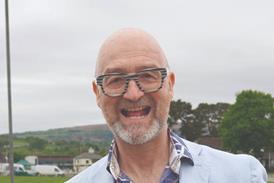

Bullied as a child that dealt with ADHD, Daniel Curtis was made to wrestle with labels and limitations from people who had no right to define him. Here, he raises the question: who were you before the world told you who to be?
I remember sitting in the waiting area at BBC Radio 2 in London.
A rabbi was being interviewed, and the presenter asked him a question many of us have asked: “Why does God let bad things happen?”
His answer was simple, and it stopped me.
“Bad things happen because they can.”
I have thought about that answer often since. We want answers. We want pain to explain itself. We want the broken parts of our stories to arrive neatly labelled, preferably with a lesson attached. We want the loop to close.
Sometimes bad things happen because they can. And still, we seek.
Necessary doubts
My favourite Bible verse is Matthew 7:7: “Ask, and it shall be given you; seek, and ye shall find; knock, and it shall be opened unto you.”
I first noticed those words through Gershwin’s ‘Someone to watch over me’. But they have followed me.
Ask. Seek. Knock. Those three words move. Asking begins with admitting we need something. Seeking means we are prepared to search. Knocking is action. You knock because part of you believes there may be someone on the other side.
That, to me, is often what faith looks like. Not certainty. Sometimes it is simply believing that something is still worth seeking.
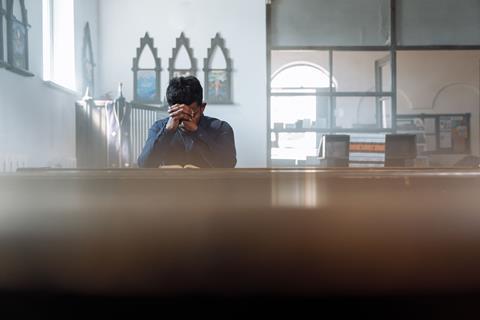
Last year, I developed a vocal polyp after a severe cough. As a performer and teacher, that frightened me. My voice was not just something I used. I had built so much of my identity around it. I sat in church praying that my voice would return.
I made a vow. If I was given my voice back, I would not waste it. I wanted to use it to bring hope, to encourage people, and to help others go after the life they may have thought was lost, buried or left behind.
I did not get an answer that day. But I did feel the question change. It was no longer only, “Will I get my voice back?” It became, “Lord, what do you want me to do with it?”
Most of us have moments when faith stops being an idea and becomes something we have to cling to. Years earlier, when my grandfather was ill, I remember praying with the kind of urgency you only understand when someone you love is suffering.
People label. God does not. He calls.
I prayed every night that he would recover. That kind of prayer carries helplessness, pleading, hope, and fear all at once.
That tested my faith.
But I have never understood the idea that doubt is the enemy of faith. If anything, I think doubt gives faith its meaning. Faith matters because doubt exists. Courage matters because fear exists.
Whose label sticks?
I was bullied as a child. I struggled to fit in. Years later, my ADHD diagnosis helped me make sense of parts of myself I had spent decades trying to explain, excuse or hide. But the words that wounded me were not all about ADHD. They were about the wider message I had absorbed: who I was allowed to be, and who I wasn’t.
Some of those words stayed for years.
I was told I was not good enough. Not attractive enough. Not smart enough. That I did not deserve the things I hoped for. That there was something wrong with me.
I do not say that for sympathy. I say it because many people are living under labels they never deserved, and limitations placed on them by people who never had the right to define them.
The danger is that, after a while, you start doing the world’s work for it. You edit yourself before anyone else has the chance. You silence the creative part. You hide the vulnerability. You mistake survival for identity.
That is why the question has become so important to me: Who were you before the world told you who to be?
I do not mean that we can simply return to some unscarred version of ourselves. Life leaves scars on all of us. But faith tells me that beneath the labels, beneath the fear, beneath the shame and the masks, there is still a person God has never stopped seeing.
People label. God does not. He calls. Jesus saw people beneath the names others had given them: overlooked, ashamed, doubting, sick, sinful. He did not pretend their wounds were not real, but neither did he define them by those wounds.
I have had to hold on to that.
For ten years, I helped organise lunchtime concerts at St Martin’s Church in Caerphilly, and I saw church at its best: people looking for friendship, peace, a kind word, a place to belong, or simply someone to notice.
Not everyone had answers. But they were seeking.
I am less interested now in pretending certainty. I do not know why some prayers appear to be answered and others do not. But the most meaningful moments in my life have rarely come from certainty. They have come from seeking: continuing to knock when I was not sure what was on the other side, believing, sometimes with very little evidence, that God was still there.
“Seek, and ye shall find” is not a promise that life will unfold exactly as we hoped. It is a reason to keep asking. To keep praying. To keep searching for answers, healing, courage, purpose, and the life we thought was lost. To keep living as the person God already sees, already loves, and has always known you to be beneath every label the world tried to make you carry.
















No comments yet