




Partner Content
From Pakistan to Ghana, WorldShare CEO Andrew Yelland shares remarkable stories of global gospel transformation and explains why empowering local Christians is the key to effective mission
Tell us about WorldShare
We enable, equip and support local, indigenous Christians to do the mission that God’s called them to in their own communities.
What does that support look like?
We raise finance in the UK on behalf of our ministry partners. Around the world our partners are working in extreme poverty, and we believe God has blessed the Western Church to be a blessing to our brothers and sisters.
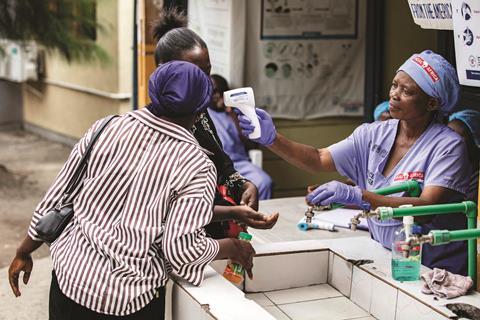
When there is a need, the people of God are generous and it’s a blessing to be able to provide funding rapidly. Just yesterday I had an email from the Christian hospital that we support in Goma in the Democratic Republic of Congo, who are dealing with the Ebola outbreak (pictured, above). We were able to send an initial sum of money last week, and they said it came at exactly the right moment. This is what we hear time and time again – it’s really encouraging to know we are a small part of God’s big plan.
The other key element is helping people in the UK pray for what’s happening overseas. It’s important for our ministry partners in countries where Christians face difficulties to know they are not forgotten.
What makes WorldShare different to other organisations?
One reason our donors trust WorldShare is when they give, we get back to them with details of how their money has been spent as soon as possible. It’s not just putting it into a big pot. Our supporters are given very clear reporting about the difference that their £10 or £20 is making.
What have been the most encouraging stories you’ve heard about how WorldShare is making a difference?
I was recently in Lahore, Pakistan where I met the pastor of a small church that’s doing incredible things.
He is also a computer programmer and saw a need for young adults in his community to be trained in computing in order to earn a living. We funded the set-up of a computer centre, and within weeks of them receiving the money, it was running classes supporting young people to have a future. The beauty of it is that the gospel is being presented at every single class they run.
When we first went to the small school we support in Ghana, we were told the biggest issue was an open sewer very close to the classrooms. I asked: “What can we do?” The headteacher said: “We just need some louvre windows to keep the mosquitoes out at night.”
We raised and sent the money. Within weeks, the windows were installed along with some circular fans. It made a massive difference.
It sounds like you’re eager to learn from the people you’re helping – and ask them what they need – rather than assume you have all the answers.
We never impose a programme upon a ministry partner. We ask: “What’s God calling you to do, and how can we help you make that happen?”
We in the Western Church need to learn from the experiences of our global brothers and sisters who, though they have very little, are far more generous than we are. They understand that their dependence is on God.
“It’s really encouraging to be a small part of God’s big plan”
Can you explain how preaching the gospel and practically serving people fit together?
After the 2023 earthquake in Turkey, we were able to support a church in Antakya, which in the time of the New Testament was called Antioch. The church and the pastor’s home had been destroyed by the earthquake. They lost everything.
Many of the congregation had fled. There were about five of them left. But God said: “The church is going to be bigger than it was before the earthquake.”
They were given a piece of land temporarily. There, they started serving their Muslim neighbours in Jesus’ name, sharing what they had. They were bringing the tangibility of the gospel and Jesus’ teaching alive to these people.
As these Muslim neighbours saw the practical love of Christ lived out day by day, they were intrigued to find out why these Christians were doing this. They said: “The local authorities didn’t help us, our imams didn’t help us, the government didn’t help us and yet the Christians were there, meeting our needs.” So people would come and listen to the gospel preached on Sunday, they would find Jesus and the church has grown exponentially since that earthquake.
I think the Western Church must learn from the example of these Christians who serve their neighbours. Stories like this are a challenge to the Church in the UK that say: “What are you doing to reveal Jesus in this community?”
To find out more visit worldshare.org.uk or listen to the brand-new podcast On Mission with WorldShare



















No comments yet