












It is thought that 2.5m people in the UK are now buying weight loss drugs privately – including many Christians. But the Ozempic trend raises huge questions about body image, shame and what it means to be “fearfully and wonderfully made”, says Di Archer
The woman leaned forward, pointed towards her torso and whispered to me: “I’m on the jab!”
“It’s going OK so far,” she continued. “I’m just not hungry. I don’t have any nasty side effects - but I haven’t told my family. I don’t want them to know…”
We met on a wet and windy day at last summer’s New Wine festival. I was representing tastelife UK, the eating disorder charity, who had a stand there. This lady wasn’t the first to tell us that she was using the new weight loss injections currently sweeping the nation. Like many, she had been so desperate to lose weight that she thought she would try out the jabs. And it seemed to be working.
“It’s such a relief! It’s stopped that noise in my head! You know, the one that goes on about food all the time, plans the next meal and worries if I don’t have snacks in my bag. The one that fights with my other self – that wants to be free of this dependency on food.”
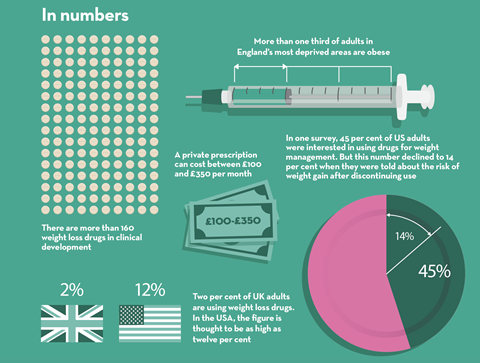
Obesity and overweight affects 62 per cent of UK adults
I could well understand that. At tastelife, we work with people who grapple with similar emotions all the time. Unhelpful food behaviour can be addictive, no matter whether it manifests in an eating disorder or just a constant background worry about what we’re consuming.
But why feel ashamed? If the drugs are helping, then why the discomfort? One explanation is that, typically, we don’t talk much about weight. The subject is regarded as taboo, even if we are genuinely worried about someone’s health. Often the only time we mention it is to compliment someone who has become noticeably slimmer. But what message does this give?
What and how?
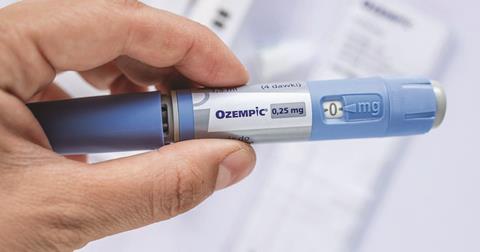
Weight loss drugs such as Mounjaro, Wegovy and Ozempic have been hailed as not just life-changing but potentially world-changing since their introduction in 2023. You probably know someone who is using the drugs – or you may be one of them. One pastor’s wife in a wealthy area told me: “Half my church community are on them!”
The self-administered injection pens are used daily or weekly, depending on type. While Mounjaro predicts 20 per cent body fat loss, Ozempic and Wegovy see an average of 15 per cent. The common factor, however, is that fat loss is fast, with visible results within six months. The drugs cost between £100-350 per month if bought privately – as more than 2.5 million people in the UK are doing.
The active ingredients are semaglutide or tirzepatide, prescription medications originally developed to treat type 2 diabetes. These are ‘glucagon-like peptide-1 (GLP-1) receptor agonists’, which mimic a natural hormone that regulates blood sugar and appetite. It can also reduce inflammation, protect from cardiovascular disease and improve kidney health. But it’s the drug’s ability to suppress appetite – and therefore reduce weight in a way never seen before – which has really caught the attention of the medical world.
With obesity-related health conditions costing the NHS around £6.5bn a year, a new way to tackle chronic weight management in adults could be hugely beneficial to patients and government alike.
Obesity and overweight affects 64 per cent of adults in England (with similar figures in the rest of the UK), so it isn’t possible to prescribe these drugs to everyone immediately. For now, the NHS is prioritising those who are overweight with at least one weight-related condition. In the meantime, millions of people are purchasing the drugs privately – over the internet or from a local pharmacy.
The noise in your head which constantly focuses on food is silenced by GLP-1, and this can be a blessed relief for many. Suddenly you have mental energy to engage better with life and relationships. Losing unhelpful body fat is equally amazing. I’ve heard stories of people being able to climb, bend, shop, play with their children…much of which was difficult to do before taking GLP-1.
There is no doubt that weight loss drugs bring hope to people who are desperate for change. We all know that obesity can cause a whole host of health issues, and that losing weight is often very difficult to do. So, a drug that helps with this is good news, right?
Into the unknown
There are side effects to weight loss drugs, however – 45 per cent of users experience nausea, headaches, diarrhoea, constipation, acid reflux or fatigue. In June, the Medicines and Healthcare Products Regulatory Agency (MHRA) launched an investigation after receiving 400 reports of acute pancreatitis linked to the drugs. Research published by the US National Library of Medicine also “establishes an elevated risk of psychiatric consequences associated with these treatments, particularly in the domains of depression, anxiety, and suicidal outcomes.”
The drugs can unhelpfully skew your relationship with food. When 54-year-old mother-of-four Shona Sibary started using a weight loss injection, the results were impressive – until she became bulimic. “I can no longer ignore the darker side of what is happening to me. The fact is that using fat jabs has, at the very least, encouraged an unhealthy relationship with food, and at the very worst triggered an eating disorder”, she told the Daily Mail.
It is reckoned that 40 per cent of the weight loss achieved through using medication is actually bone and muscle mass. Combating this is essential, especially in those over 60, for whom it is extremely hard to regain. The biggest challenge for users is to balance rapid weight loss with strength training and a high protein diet. For this reason, government guidelines recommend that use of the drugs is paired with lifestyle and diet changes. Without this, the weight is almost guaranteed to pile back on as soon as you stop taking the drugs.
The long-term results are also unknown. Everybody reacts differently too. Some people plateau after a while. While pharma companies are racing to develop a pill form with added protection against muscle loss, doctors are questioning whether this will be a lifetime drug for some, not just those with diabetes.
Wealth and weight
The majority of GLP-1 users in the UK are buying them privately. It is hoped that the drugs will become cheaper as patents expire this year and generic versions come to market, but currently, there is a clear bias towards those who can afford the expensive monthly cost. Yet obesity and deprivation have a high correlation; those on low incomes have fewer resources to buy healthy food, which is typically more expensive than ‘junk’ food. It seems unjust that the people who may need these new drugs the most are least likely to be able to afford them.
Weight loss drugs have been hailed as potentially world-changing
Our God is never in favour of a bias to the rich. As Christians, we are called to reflect the opposite, and: “Speak up and judge fairly; defend the rights of the poor and needy” (Proverbs 31:9). He is also the God of justice, and the burgeoning black market in these drugs is not only illegal but carries huge risks to users. Drugs may arrive with no instructions, cheap needles and unrecognisable contents – as Channel 4 uncovered in their documentary The Truth about the Skinny Jab.
More than a medical dilemma
The message that thin is beautiful and best has been prevalent in our culture for decades. The average model agency still demands a thinner than average physique, despite the body positivity movement. It’s all too easy to believe that: When I am thin/if I was thin, my life would be great – especially as we are bombarded on all sides by a veritable tsunami of advice about the ‘in’ body shape, diets, skin care, weight gain, weight loss, bulking up, slimming down, exercise, what to eat, what not to eat, how to eat, what to wear etc. Just because we are Jesus followers does not make us immune from the pressures of an image-obsessed society.
Who wouldn’t want to be told they look amazing? Yet the pressure exacts an expensive toll, playing on insecurities in both men and women, and especially in young people. It prompts us to spend, spend, spend on the latest fashion, food or exercise fad, trying to turn ourselves into an identikit of an online photoshopped image. It’s exhausting!
Solution or scourge?
Unregulated online sales mean that access to weight loss drugs is easy – even for under-18s and already underweight people. The only limitation is expense. This is a real danger for those with eating disorders. Addiction to weight loss itself can develop too, which can lead to eating disorders such as anorexia and bulimia, which are increasing. GLP-1 could turn out to be a magical solution for some, but a nightmare for others.
The whisper of shame
The feeling of shame that accompanies GLP-1 use exists for many, not just Christians. In a recent Channel 4 report, a pharmacist told a customer: “I’ll put it in an unmarked brown paper bag for you,” assuming that the person would want his weight loss drugs hidden from view.
An interviewee on This Morning said she only told her husband after she began taking the drugs. She had lost weight and was making efforts to stay in the ten per cent of GLP-1 users who kept it off once they stopped the drug, but she still felt there was a stigma. Society gives the message that weight issues are largely self-inflicted, and successful weight loss is a demonstration of self-control, so she was concerned about ‘skinny shaming’; being denigrated as a ‘cheat’ or ‘lazy’ for using drugs to lose weight.
Just because we are Jesus followers does not make us immune to the pressures of an image-obsessed society
For Christians, self-control is a fruit of the Spirit (Galatians 5:22-23), so the perceived lack of it in weight gain compounds the feeling of shame. Yet studies have consistently shown that 40-70 per cent of the tendency towards obesity is genetic. This fact should challenge us all to treat ourselves and others with more compassion.
There is a balance here. If our bodies are temples of the Holy Spirit, one motivation for looking after our physical health is gratitude. But this is easier said than done. Shame creeps in easily if we feel we are not living up to our own standards, let alone those set by others. Yet condemnation is a weapon of the enemy, in direct contrast to Paul’s radical declaration that there is “now no condemnation for those who are in Christ Jesus” (Romans 8:1-2).
The truth is that we are “fearfully and wonderfully made” (Psalm 139:14), no matter how we feel or look. We had no choice over the body we were born with, and for some, it comes with significant health issues, not just weight implications. We all need help at times, and that may take the form of medical intervention.
Does God understand?
While it is true that difficulties around eating can be devastating, the society we live in is much to blame for this. We are surrounded by cheap, addictive foodstuffs that are low in nutrients. These have been hitting the headlines recently, with Dr Chris Van Tullekan revealing how damaging Ultra Processed Foods (UPFs) are. The World Health Organization defines these as “industrial formulations with five or more ingredients, often including additives like flavors, colors, and emulsifiers not typically used in home cooking”. With 57 per cent of the food eaten in the UK defined as UPF, there is growing concern about its effects on our health and weight. Research suggests it can adversely affect our mood and sleep too. In addition, we are bombarded by advice about nutrition, juggle pressured lifestyles, struggle with limited budgets and face an overwhelming plethora of choice. Food comes loaded with history, memories, feelings, experiences and gets mixed up with love and rewards.
There is no doubt that weight loss drugs bring hope to people who are desperate for change
Do we really think that the God of the universe doesn’t understand all that? At tastelife, we have met so many people who assume God must be angry, distant and disappointed in them because they have a complicated relationship with food. But God is for us, our health and wellbeing. Jesus is all about grace. He understands desperation and, in answer to prayer, he might miraculously stop the food noise in our heads. More likely, he will take us on a journey where we learn precious and wonderful things about who he is, who we are and what freedom really means.
We are not defined by our weight. As Christians, we are defined by our relationship to God. We are his children, whom he loves (1 John 3:1). These real-world issues are not beyond his reach – whether or not we are using weight loss drugs.
What to know for safe use
• Choose a reputable source and find accurate information from your GP, even if you’re buying privately. Ask for their support.
• The imperative to prioritise protein and strength training to preserve your bone health and muscles should be taken seriously.
• Take as low a dose as possible.
• Use the mental space to retrain your relationship with food for good. Prepare yourself for a healthy future without weight loss drugs – the future you’ve always wanted.





















No comments yet