










A viral clash between Christian apologist GodLogic and Muslim debater Mohammed Hijab descended into mockery and legal action. But the real problem is how the Church responded, says Alistair Lettin. Why are Christians more concerned with policing their own than engaging those who oppose the gospel?

“We demolish arguments and every pretension that sets itself up against the knowledge of God, and we take captive every thought to make it obedient to Christ.” (2 Corinthians 10:5 NIV)
I’d like to start with an uncomfortable observation. A Christian apologist films a calm respectful conversation with a prominent Muslim debater. The Muslim grows visibly flustered, resorts to mockery, and then files a copyright strike to bury the recording.
What happened?
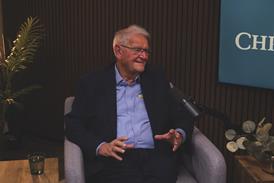
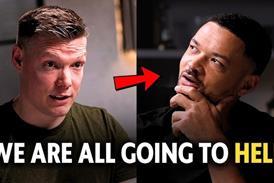
In a recent exchange between popular Christian apologist and Youtuber, Avery Austin, (known online as GodLogic), and the Muslim apologist Mohammed Hijab, the two debated the ‘Islamic dilemma’, clashing over whether the Qur’an confirms or overrides the Tawrat (Torah) and Injeel (Gospel) of the Bible.
Despite initially agreeing to record the debate, Hijab leaned heavily into insults, dismissing GodLogic as a “nervous boy” with “no degrees” or “formal qualifications”. The tone shifted from discussion to a heated back and forth. GodLogic stayed relatively composed, highlighting the disparity in conduct and character during the interaction.
The debate quickly became secondary to its fallout. Reactions from online audiences framed it as an embarrassment for Hijab, while his attempts to contain the narrative - by taking down his video of the debate and copyright striking GodLogic’s recording - only amplified it. Many called it “damage control”, with both Christians and Muslims agreeing that Hijab’s behaviour was poor.
In contrast, Avery’s conduct is, frankly, exemplary. He opened the conversation softly, asking permission to record, acknowledging Hijab’s reputation, and actively disarming tension. He did not come in swinging. When Hijab’s tone escalated, becoming increasingly mocking and hostile, Avery shifted register without abandoning grace. He remained content-focused, pressing on substantive questions relating to the internal contradictions within Islamic theology, without descending into personal attack. He met hostility with rigorous defense, not retaliation.
This is a model worth studying. The ability to modulate tone, to be winsome when the door is open and firm when the challenge demands it, is not a compromise of Christian integrity. It is the very adaptability that the New Testament commends. And when a debate’s aftermath involves one party trying to erase the evidence, it is usually because the evidence does not flatter you.
The internet is a mission field
Most observers who watched the exchange would say the Christian acted correctly, and won on merit alone. Yet a familiar and troubling pattern emerges: a significant portion of the criticism directed at the encounter comes not from Muslims, but from fellow Christians. This is a problem we need to address.
The debate between Hijab and Godlogic has become something of a recurring case study in what modern Christian apologetics looks like, and in how reflexively the Church can undermine its own.
When a debate’s aftermath involves trying to erase the evidence, it is usually because the evidence does not flatter you.
Before the argument about tactics, conduct, or “Christlikeness” gets going, it is worth pausing to ask a harder question. Why are so many Christians more concerned about the style of their own defenders than the substance of the attacks being levelled against their faith?
The digital space is not a distraction from ministry. It is ministry. Billions of people consume content online every day, and among them are millions who are genuinely searching.
Questioning the faith they were raised in, exploring alternatives, or encountering Christianity for the very first time through a debate clip on YouTube. The maturity and proliferation of online Christian content has quietly done more to put biblical literacy, church history, philosophy, and comparative religion into the hands of ordinary believers and enquirers than almost any other development in recent memory.
We are living in an era where a 20-year-old in Manchester, Jakarta, or Lagos, can access arguments and resources that a previous generation of apologists spent decades tracking down in seminary libraries.
To dismiss this space as somehow ‘unchristian’, or to suggest that engaging within it is a waste of time, is to abandon the mission field at precisely the moment it has become most accessible. I challenge the reader to name a better platform to reach the unreached. Christians are policing the tone of a YouTube video while Islamic and atheistic critiques of our faith circulate freely and largely unchallenged. If we redirected that energy toward evangelising Muslims, how many more would come to faith?
A “biblical” approach to apologetics
One of the more frustrating arguments circulating in Christian circles is the assumption that there is a single, correct, Christlike method for defending the faith, and that anything deviating from that model is spiritually suspect. This view does not survive contact with the New Testament.
Jesus himself was confrontational with the Pharisees, tender with the Samaritan woman and philosophically probing with Pilate. Paul debated publicly in synagogues, reasoned with Stoic philosophers at the Areopagus and wrote combatively to the Galatians. He entered public spaces, challenged cherished beliefs and was entirely unafraid of controversy. The lesson is not that anything goes. It is that apologetics, done faithfully, must be responsive to context.
The DL Moody observation is worth repeating here: One day a woman criticised DL Moody for his methods of evangelism. Moody’s reply was: “I agree with you. I don’t like the way I do it either. Tell me, how do you do it?” The lady replied: “I don’t do it.” Moody responded: “I like my way of doing it better than your way of not doing it.”
Critics who spend their energy cataloguing the faults of active Christian apologists without offering anything in their place are not serving the church. They are performing a kind of spiritual risk aversion dressed up as discernment.
Christians in the West have developed an unfortunate habit of hyper-fixating on imperfect apologetics rather than engaging the actual challenges being made against the faith. Islamic and atheistic critiques of historic Christianity are not going away. They are, if anything, becoming more sophisticated and more widely distributed.
Every hour spent policing the tone of a GodLogic video is an hour not spent preparing a response, training the next generation of apologists, or building the theological confidence of the ordinary believer in the pew. And who can blame those ordinary believers for their confusion, when the loudest Christian voices online seem more interested in critiquing their own than in confronting those who oppose the gospel?
We do not need to reinvent apologetics for the internet age. We need to bring to bear the nearly 2,000 years of accumulated argument, scholarship and testimony that the Church already possesses. Argument and testimony that is, for the first time in history, almost entirely searchable, translatable and shareable.
The tools are there. The need is there. The audience is there. What matters most now is the will to show up, and the support of those who already have.
Legal action
After GodLogic’s video was struck down, YouTube restored some clips of the debate, before they were removed again. It appears that Mohammed Hijab has initiated a court order to keep the copyright strike in place. Godlogic has since confirmed that he is “going to court”, and has launched a GoFundMe to support his legal costs.
Reaching a verdict in this case will be complex, given the differences between UK and US copyright law and their approaches to fair use. Christians should pray for a swift and fair resolution.



















No comments yet