







As anti-semitism rises around the world, Rev Peter Ould says now is a good time for Christians to demonstrate solidarity with Jews
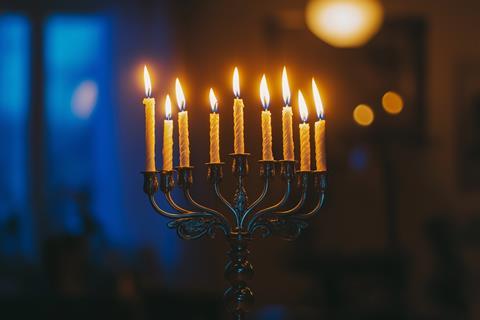
Like many other Christians, this year I have lit Chanukah lights all the way up to last night’s eight candle (plus the servant candle).
There is, however, some controversy as to whether Christians should participate in Chanukah, so I want to suggest three reasons, especially in 2025, why this was a good thing to do for those in the Church.
First, we light Chanukah candles to show solidarity with Jews around the world at a time of heightened persecution. From the October 7 pogrom, to the Heaton Park Attack and Bondi Beach massacre, via the massive increase in online antisemitic material, our Jewish friends are experiencing unprecedented hostility on a day by day basis. Chanukah is the festival of lights, a public display that God’s people will not have their lights put out and their worship of God extinguished.
You don’t have to believe the Chanukah story, let alone join in the prayers and blessings, to participate in the message behind the candles. That’s especially important in 2025 when secular and religious Jews alike are simply being killed for being who they are. Chanukah lights are a display of humble defiance, a declaration that violence and intimidation cannot stamp out identity.
Second, the Chanukah story of the miracle of the eight day provision of light is part of our religious heritage. Granted, the story is not part of the mainstream Bible, as it’s contained in one of the apocryphal books on which Christians disagree whether it should be scripture. The Anglican Articles of Religion say these books are “read for example of life and instruction of manners; but yet doth it not apply them to establish any doctrine”.
In 1 and 2 Maccabees we read of the desecration of God’s temple in Jerusalem by the Selucids, and the Jewish uprising that restores and cleanses God’s holy place. Specifically, the Temple light needed to burn for eight days to complete the rededication, but the Jews only had oil for 24 hours. By a miracle, the lights were lit and they lasted eight days, way beyond what the oil could reasonably provide.
Chanukah, if you believe the accounts, is God’s last saving act before the coming of Jesus. It is about the restoration of God’s presence with his people, through his own grace and power, not the people’s. It is a story of light coming into the world and shining among God’s people in the absence of fuel of their own.
Third, it is likely that the angel Gabriel visited Mary during Chanukah to announce she was pregnant. By way of brief explanation, when you try and date the real birth of Jesus, you see that rather than 25 December, Jesus was most likely born at the end of the Feast of Tabernacles (Succoth) in mid to late September. If you count back nine months from there, you arrive at mid to late December, and the festival of Chanukah.
Gabriel’s announcement to Mary includes the words “The Lord is with you”, announcing the return of God’s presence to his people, in the same way that 8 days of a light shining symbolically indicated God’s presence in the Temple. Mary’s response, the Magnificat, is full of the language of Chanukah – divine reversal, hope in oppression, light overcoming darkness. It is in the line of a series of songs from Hebrew women in the Bible – Miriam, Deborah, Hannah and others – all of whom sing of God bringing justice and redemption. Mary’s song is the final song, the hymn of a woman who will now give birth to the promised Saviour her sisters only dreamed of.
The Chanukah liturgies on the eighth and final day take us to Numbers 7 and 8, where all the tribes of Israel bring their offerings to make the Tabernacle (the forerunner of the Temple) complete. At this point God speaks to Moses from above the Ark of the Covenant, with his voice coming as though it were above the Mercy Seat, where blood was sprinkled once a year to foreshadow Jesus’ final complete sacrifice. God’s voice tells him to light the lamps, and make sure that all seven (the number of God) are clearly seen.
For Christians, the birth of Jesus is the ultimate purpose of God calling out the Hebrew people to be his, to eventually bring forth the Messiah. It is, as it were, the final offering of his people in being the bearers of his message for hundreds of years, through exile and suffering. Although we should note they remain a special part of God’s purposes in the world.
To recognise that when the New Testament talks about “the Light of the World” it has allusions to Chanukah is not to appropriate or “Christianise” a Jewish festival, but rather it is to confirm that the story of Israel up to the birth of Jesus is ultimately all pointing towards him.





















No comments yet