








The Christmas season is an invitation to learn from the example of John the Baptist, says Rich Villodas. In a world full of fear and a culture that prioritises self, his witness challenges us to point towards the light of Christ which overcomes all darkness

Every season in the church calendar carries a particular emphasis. During this Advent season, we are invited to pay attention to various themes and figures who appear in the opening chapters of the New Testament - John the Baptist, Mary, Zechariah and the angels, to name a few. Each of them bears witness to the coming of Christ in their own way.
In John’s gospel, John the Baptist is the first figure we encounter, and he gives us a clear and powerful lesson: our lives are meant to point to Jesus. The Gospel of John introduces Jesus not through genealogies, shepherds or manger scenes, but with cosmic language: “In the beginning was the Word, and the Word was with God, and the Word was God” (v1).
Our role is to behold Jesus ourselves and then to point others toward him
The metaphysical and supernatural language reminds us that Jesus is more than a human. Yet, immediately after this exalted introduction, the narrative turns to someone ordinary - a man named John. The contrast is striking. It reminds us that Advent holds together both the supernatural and the ordinary.
John is a common name, both in Bible times and now. But this is the point. God uses ordinary people. John was a unique witness, but scripture reminds us that we are all called to be witnesses. God wants to partner with us so that the light of Christ might shine in the world.
Beyond ourselves
Witnessing, as theologian Karl Barth once said, means pointing beyond ourselves to another. Advent challenges us to consider whether our lives are truly pointing to Jesus. Too often, instead of pointing outward, we point inward. Augustine described sin as incurvatus in se - becoming curved inward on oneself.
Our culture encourages us to orient ourselves around the unholy trinity of “me, myself, and I” and modern social media amplifies that temptation. Yet John models something different. He knew who he was - and who he was not. When asked if he was the Messiah, he freely confessed that he was not. His clarity allowed him to point others in the right direction - toward Christ.
This is our calling, too. We are not the light, but we are invited to bear witness to the light. Like John, our role is not to attract glory to ourselves but to direct attention to Jesus. Even the Holy Spirit takes this posture, Jesus tells us, guiding us into truth not to magnify himself but to glorify Christ. The Spirit is most present where Jesus is most central.
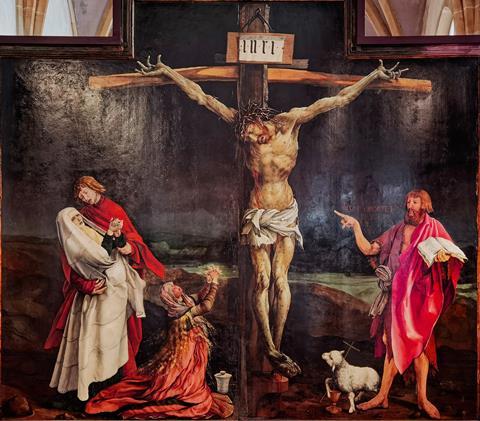
In Matthias Grünewald’s 15th-century painting The Crucifixion, John the Baptist is depicted as pointing his long, bony finger toward the crucified Christ. Barth kept a copy of this painting in his study as a reminder that the task of the Christian life - and especially the preacher - is always to point to Jesus.
A present help
But what does that mean practically? It means helping others to recognise God’s presence. It means organising our lives around Jesus and his mission, and guiding people to understand that their deepest desires are met only in communion with God.
It means living with hope in the midst of darkness, trusting that Christ is coming again to make all things new.
Advent holds together both the supernatural and the ordinary
Advent does not deny the darkness. We see oppression, poverty, racism, war, sickness and evil all around us. But Advent insists that darkness does not have the last word. As John writes, “The light shines in the darkness, and the darkness has not overcome it” (John 1:5).
Notice the shift in the tense. The first four verses are written in the past tense - “was” - but when John speaks of the light, it changes to present. The light shines even now. The resurrection confirmed it. The light continues to break into the present.
Divine light
This light is not the product of human effort or goodness. The divine light of Christ is one that darkness cannot comprehend or overcome. Advent calls us to open the curtains of our lives to let this light in, even if just a sliver at first. God’s love is never coercive or forceful. It waits for our willingness to receive.
And so, our role is simple yet profound: to behold and to point. To behold Jesus ourselves, fixing our eyes on him, and then to point others toward him. This is the task of every parent, friend and follower of Christ. It is the task of the Church - and it is the invitation of Advent.
“Behold, the Lamb of God who takes away the sin of the world” (John 1:29). These words of John the Baptist echo into our lives. No matter our fears, failures or anxieties about the future, Advent whispers to us: “Behold Jesus. Fix your eyes on him. Trust that the light shines, and the darkness cannot overcome it.”
Advent, at its heart, is about learning to point again - away from ourselves and our distractions toward the one who is our hope, life and light.






















No comments yet