


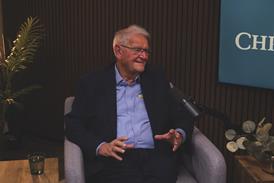









The Strictly star’s decision to discuss his decades-long struggle with pornography raises searching questions for the Church, says Tim Parks. When three quarters of Christian men and almost half of Christian women say they watch it, what does this means for discipleship, honesty and formation?

When television presenter and former Strictly Come Dancing champion Ore Oduba revealed that he had been struggling with pornography since the age of nine, it made headlines. Not only because of the length of his addiction - 30 years - but because of the vulnerability involved in telling the truth publicly.
“I never imagined I would ever share this with anyone,” he admitted. His decision to speak now, he says, comes from a desire to guide his children as they inevitably encounter sexual content in their own digital world.
That detail alone is worth reflecting on. Why would a man who grew up with a faith, and who has rediscovered that faith in recent years, feel unable to talk about this for so long? Why did it take becoming a father - not simply his own pain, nor his experience of faith - to make him break his silence?
When we fail to disciple people sexually, shame often fills the gap
His story exposes something the Church must wrestle with. Pornography does not just trap people in behaviours they struggle to change - it traps them in silence. It shapes self-understanding long before someone encounters Jesus - and then continues shaping the way many believers relate to God and to others.
Shocking statistics
Research supports this. Barna Group reports that 75 per cent of Christian men and 40 per cent of Christian women say they watch pornography. Among those who consider it a struggle, 82 per cent say “no one” is helping them. Ore’s secrecy is not unusual at all. It is worryingly commonplace.
This shaping also begins shockingly early. The Children’s Commissioner for England found that 70 per cent of young people had seen pornography before turning 18. More than a quarter encountered it by age eleven - many by accident - and some as young as six. We are forming disciples who were first formed by pornography.
That means that when discipling young people, we must also disciple them sexually. Too often, the internet becomes their first teacher about sex, not the Church. We need to teach that sex is designed by God, that it is good, and that it reflects his purposes for intimacy and covenant. If we avoid these conversations, culture will fill the gap with distortion.
Sexual discipleship means helping young people understand that their bodies and desires are not shameful, but part of God’s good design - while also guiding them toward holiness and healthy boundaries. This is not an optional extra; it is core to forming whole-life disciples who can navigate a digital world with confidence and grace. When we fail to disciple people sexually, shame often fills the gap. And shame doesn’t just affect behaviour, it shapes identity.
We are forming disciples who were first formed by pornography
At Naked Truth Project, we regularly hear believers describe worship as an inner battlefield. They ask: “How can I sing about God’s love after what I watched this week?” Pornography becomes the enemy’s megaphone, amplifying the lies that you are unworthy, unlovable, disqualified. This is why pornography is not simply a behaviour issue. It is a discipleship crisis. It is hard to receive God’s love when we hate ourselves.
It also affects our witness and mission. People exploring faith often believe they need to ‘fix’ themselves before they can belong. Believers feel unable to speak about Christ when privately convinced they are unchanged. Pornography does not only create private struggle; it cultivates isolation and quiet withdrawal from mission, worship and community.
The gift of honesty
This is where Ore Oduba’s honesty becomes a gift. It models the kind of courage the Church desperately needs. His willingness to speak invites Christian communities to ask whether we are truly safe places for people to bring their whole story.
The good news is that change is possible, both individually and in our churches. But it requires intentional formation, not just rules; teaching that shapes desire and identity; spaces where vulnerability is normal; pastors, parents and youth workers who speak earlier and more clearly; and recovery pathways that combine honesty, accountability, spiritual support and compassion.
Churches don’t have to do this alone. Naked Truth Project equips congregations with resources, training, small group materials and recovery tools that make it possible to talk about pornography well and support people meaningfully.
Ore’s confession should not merely shock us. It should call us to reflection - and action. People are entering churches with years of unspoken struggle. The silence has discipled them long enough. Now is the time for the Church to disciple them better, into honesty, identity, grace and hope.













No comments yet