










It took nearly 2,000 years to translate the Bible into 400 languages. The next 400 took just 28 years. As the Bible reaches its 800th language, Wycliffe Bible Translators’ Jeremy Weightman explores the remarkable acceleration in Bible translation - and the immense task that still lies ahead for the 1.5 billion people without scripture in their own language
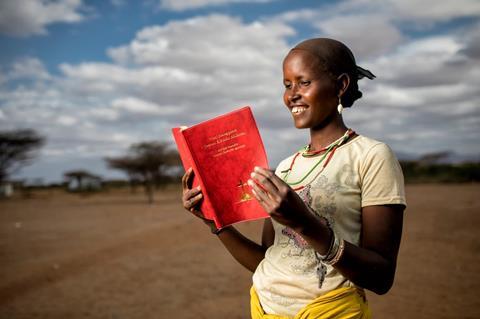
It had never occured to me.
Week after week, for years, I had turned up to church meetings with my Bible in my hand. I’d spent time in my secret place, reading passages from my Bible. Originally it was the King James, then the Good News and Living versions, before the NIV became my go-to. And that is how it has stayed – with occasional forays into The Message or some of the many other versions in English.
I took it for granted that I have all these options for reading the Bible in English – the language that speaks to my heart the most.
It never occurred to me that if I had spoken another language (such as Nobonob in Papua New Guinea) I’d have no choice – there would only be one translation available.
It never occurred to me that if my heart language was, say, Bunong (Cambodia), I wouldn’t have the complete Bible at all. Or even, like the Kinuku people of Nigeria, none of God’s word in my language.
But that’s the reality for 1 in 5 people worldwide. They don’t have the whole Bible in their heart language.
A shocking injustice
I only discovered this when I started to work for Wycliffe Bible Translators, in 2018.
Once I began working for Wycliffe my worldview was turned upside down. Around 1.5 billion people do not have the Bible in their language, I was told. That shocked me. Why didn’t I know this? How could this injustice exist? Why was I able to have God’s word in multiple translations in my language, while so many had none?
Since that eye-opening moment, I’ve had the privilege of reporting on the tireless work of Bible translation teams worldwide. They faithfully serve their communities, translating the word of God into their own languages. They’re in for the long haul – translating the New Testament can take 8–10 years, the Old Testament a further 10–12. Or more. There are no easy solutions or quick fixes. It’s painstaking, detailed work where accuracy is vital.
But there is good news! The work of Bible translation is accelerating at an unprecedented rate – so let me share the latest exciting news with you!
The 800th
In 2020 we celebrated the major milestone of the translation of the Bible into its 700th language.
Then, last week, we celebrated the Bible in its 800th language! In itself, an extraordinary moment for Bible translation.
But when I began looking deeper, I realised just how much progress has been made in recent years:
- The number of languages that have the whole Bible translated has doubled since 1998
- It took over 1,900 years to translate the Bible into 400 languages, but just 28 years for next 400 languages to get the Bible
- 500 million more people have access to the complete Bible in their language now than in 2020
We can’t pick out the actual 800th – many recent translations are in digital form only. However, we can celebrate a representative, such as the Koma Bible, which was launched in Ghana in 2024 after 37 years’ work.
Sylvester Kwame Nkrumah said at the launch: “We have seen the impact that having the scriptures in the language the Koma speak has had on their community. As the Koma Church has grown confident in using the scriptures in their own language, so people have been transformed.”
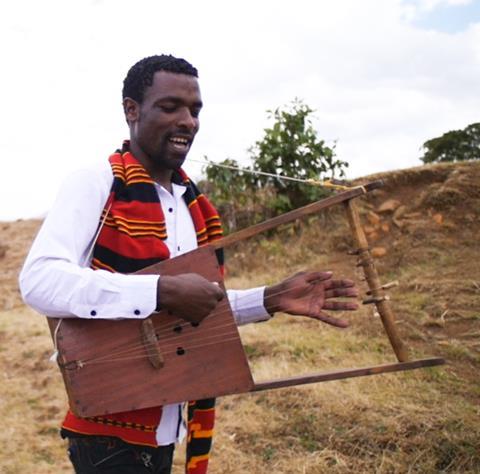
Lives transformed by having God’s word in your heart language – that’s what this is all about. Lives like Abraham, a Gamo speaker I met in Ethiopia (pictured, right). Born into a voodoo family with a father who was a shaman, Abraham was expected to follow in his father’s footsteps. But then he read God’s word in his Gamo language, and his life was never the same again. He told me: “Having the Bible in my language brought me from darkness to light.” Now he’s a strong and vital member of his local church.
Hitting the accelerator
There has been extraordinary acceleration in translating the Bible into new languages. This has been possible through the far greater involvement of Bible translation teams from the communities, plus increased prayers and giving of supporters, and advances in technology.
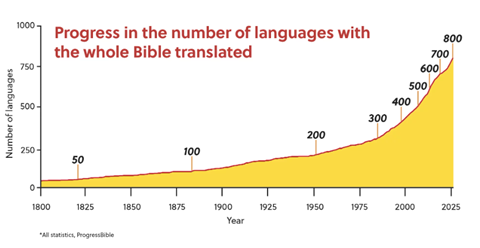
The acceleration means communities are receiving the Bible far sooner than seemed possible only a generation ago. As churches engage with the scriptures in their own languages, they are better equipped for evangelism, discipleship and ministry. Lives are transformed; communities and cultures are changed.
The 800th Bible is an astounding feat worthy of celebration, but with well over 7,000 languages in the world, there is still much to do. The good news is that the rate of progress is increasing dramatically.
So next time you open your Bible and read God’s word in your language, take a moment to thank God for those who laboured to give it to you. And pray for Bible translators worldwide as they seek to end Bible poverty and ensure their communities can access God’s word in the language that speaks to their hearts.
For more about Bible translation, and how you can get involved, visit wycliffe.org.uk


















No comments yet