









On one busy inner city estate, a church decided that prayer should not be confined to the building, but integrated into the hustle and bustle of everyday life. Here’s what happened when they build a ‘prayer stop’ outside their church where no buses ever stop, but plenty of people do
I have ministered in East London for 16 years. During that time, every so often, someone asks if they can come into the church to pray. It is always a beautiful request, yet also a complicated one. Our building sits in the heart of a housing estate and, for safeguarding and security reasons, we simply cannot leave the doors open all day.
Since 2020, we have tried to respond creatively to that tension by opening a church café. It has been a gift. The space is accessible six days a week, filled with conversation, coffee and quiet moments of reflection. Yet even with that provision, there remain long stretches of time when the building is closed - and the desire for an accessible prayer space is still an issue.
In January 2026, I had coffee with a friend who leads the Stepney House of Prayer. He is one of those people who carries prayer lightly but seriously. He is often found prayer walking the streets, noticing God in overlooked corners of our city. As we talked, the question came up quite naturally: What does urban prayer look like when the church cannot keep a chapel open to the public all the time?
For years, I have wondered what prayer looks like among tower blocks and concrete walkways
We laughed about estate life and the amount of time we spend waiting at bus stops for the right bus to come along. Somewhere in the middle of that came a playful thought: What if there was a bus stop at which no bus ever arrived, a place simply to sit and wait on God?
The idea stayed with us. Could such a familiar, urban structure be reframed as a space of encounter, stillness and hope in the middle of ordinary life?
So we built one.
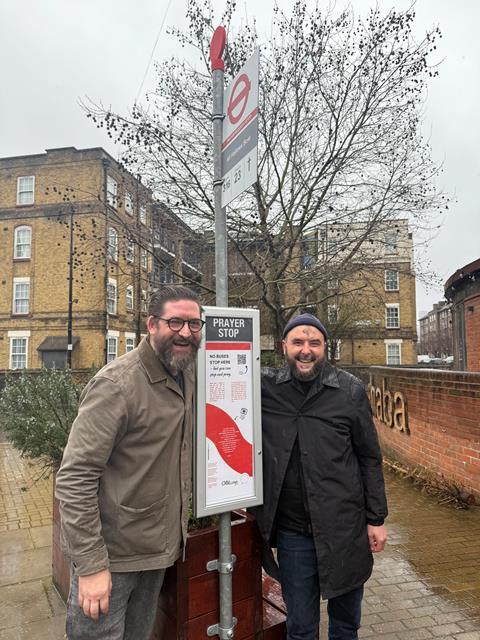
Our urban prayer space takes the form of a bus stop, complete with a sign and a QR code. Instead of bus times, the code leads to a page where people can offer prayer requests or pray for others. It is simple, understated and yet deeply intentional.
It is common to see Muslims praying in the street when local mosques are full yet, among Christians, this visibility is rarer
Since opening, the prayer stop has quietly gathered stories. Teenagers have sat there and café visitors have lingered after their drinks; emails arrive at all hours, carrying prayers shaped by grief, financial anxiety, uncertainty about the future, or simple longing for God’s kingdom to come in Bow.
For years, I have wondered what prayer looks like among tower blocks and concrete walkways, where weeds grow through pavement cracks and life feels relentlessly fast. The prayer stop seems to hold this all together. It invites stillness without removing people from their everyday setting. In the heart of our community, surrounded by the hustle and bustle of life, prayer is now visible.
There is after all, much to pray for.
Living in a neighbourhood with a strong Muslim presence has also shaped this reflection. It is common to see neighbours praying in the street when local mosques are full. Prayer is visible and public yet, among Christians, this visibility is rarer. The prayer stop gently changes that, with the cross in plain sight and the good news quietly present in the flow of daily life. I was asked by one person if it was OK for them to remove their shoes when they prayed at the bus stop; they said it felt like holy ground to them.
So, we are hoping for a few things. Firstly, we hope not to confuse anyone who is really waiting for a bus. If we do, then we are terribly sorry. But our other hope is to put prayer back onto the streets, not as a performance, but as an affirmation for the whole of life. That where we walk, talk, live and work is a place for prayer. Not hidden in chapels, but out in the everyday life of the estate.



















1 Reader's comment