








Is a powerful Christian media mogul responsible for climate change misinformation? Clare Fussell explains why Christian climate group Operation Noah is so concerned about Sir Paul Marshall’s recent donations to churches
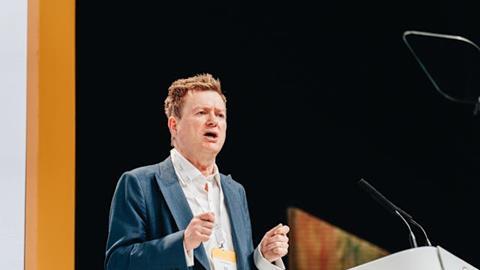
Earlier this year, over 120 Christian leaders, including several serving bishops and former Archbishop of Canterbury Rowan Williams, signed an open letter coordinated by our organisation, Operation Noah, to Sir Paul Marshall, a wealthy hedge fund manager and media baron who is also a Christian.
In that letter, we expressed concern about a number of Marshall’s public statements on climate and decarbonisation, requested transparency regarding Marshall’s financial interests in fossil fuels, and raised questions about the volume of climate misinformation reportedly broadcast on GB News, one of several media entities Marshall owns.
We also invited Marshall to meet a small group of signatories to discuss these questions. While Marshall has responded to some of the issues we raised, he has not directly answered our query regarding his financial interests in fossil fuels, nor has he accepted our invitation to meet.
By way of background, Marshall’s personal wealth is approaching £1bn; this includes ownership or part-ownership of GB News, The Spectator and UnHerd: media outlets which shape public debate on the critical issues facing our society today. This means Marshall is one of the most powerful non-elected people in the country and one of the UK’s most powerful Christians, making questions of transparency and accountability particularly important.
Our concerns are not rooted in an opposition to wealth, business success, or political diversity – Christians can and do hold a range of views on economic policy and how best to transition to clean energy – rather, the question in this case is whether our debates and actions are characterised by honesty, transparency, and following the evidence wherever it may lead.
Researchers identified at least 953 attacks on climate science and climate action on GB News around the time of the 2024 general election. Researchers also found GB News contributors and commentators made dozens of inaccurate or misleading statements about climate change alongside platforming a think-tank which, in the past, has been funded by the fossil fuel industry – an industry which has consistently lied about the causes of global heating and impacts of fossil fuel pollution.
Whether one supports particular climate policies or not, public debate is poorly served when evidence is distorted – or when expert consensus is misrepresented or marginalised.
It would appear that Marshall himself has done nothing to discourage GB News from broadcasting misleading information about climate change; in fact, he has publicly stated that decarbonisation (‘net zero’) is “leading the way in wrecking our industrial base”, “impoverishing our people” and “sacrificing our energy security” – this despite evidence which shows decarbonisation is a huge growth opportunity that will save trillions of dollars in the long-term alongside improving our health and wellbeing and contributing to the UK’s national security. A significant majority of UK citizens also support government-led climate action.
The overwhelming scientific consensus is that human activity – especially the burning of fossil fuels (coal, oil, gas) – is the principal driver of an overheating planet. The consequences of this are visible around the world; these include more extreme weather events, increased threats to food security, displacement of vulnerable communities, and growing risks to our health. Sadly, these impacts often fall most heavily on those who have contributed least to the problem.
For Christians, this is not simply an environmental issue, but a matter of discipleship. Jesus taught that love of God and neighbour are the greatest commandments, and are inextricably linked (Mark 12:28-34, Matthew 22:34-40); so when climate change threatens human lives and wellbeing, responding to that threat is an expression of God’s love for the world.
The Church has never pursued difficult goals because they were easy or inexpensive. Rather, it has sought to respond faithfully to the challenges of its time, loving both God and neighbour. As climate impacts intensify, this means doing all we can to reduce our contribution to the problem while supporting communities in the UK and abroad that are most vulnerable to its impacts.
Furthermore, questions around responsibility and transparency are not limited to Marshall. If Christians are to speak credibly about the climate crisis, we must be willing to examine not only the actions of others, but also our own investments and responsibilities. In the UK, churches, denominations, and Christian charities collectively steward tens of billions of pounds in investments and assets. And while nearly every UK denomination has now taken its money out of fossil fuels for ethical reasons, churches now have the opportunity to help fund the transition to a cleaner, greener, more resilient world – and to encourage others to do the same.
This is why we are inviting churches, denominations and Christian organisations to sign our Green Investment Declaration and put a percentage of their investments into funding climate solutions. By joining this growing movement, Christian institutions can commit themselves to putting their money where their faith is while addressing the most serious issue we face.
At a time when the climate crisis can feel overwhelming – and in a world of misinformation, where the truth is now regularly contested – investing in climate solutions is a practical and hopeful way for the Church to bear witness to the reality of the present moment, and to demonstrate our hope for the future. Together, with God’s help, let us invest in the technologies, industries and communities that will build a safer, greener and fairer world for all.
See here for an alternative view on this story from Rev Dr Ian Paul




















8 Readers' comments