






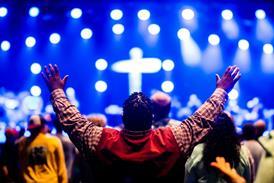





Young men are returning to church in surprising numbers, while young women are increasingly seeking spirituality elsewhere. Nay Dawson argues it’s time for the Church to rethink how it engages both hearts and minds

Last week, I met a young man called Tom. It was his first time in church, so I asked him what had brought him there. He said he’d been to a rally in London and heard that our country needs to return to its Christian values. Afterwards, he reached out to his grandad, who is a Christian. He had bought him a Bible and connected him with someone from our church – and now, here he was.
It felt like a textbook story of the kind I’ve been hearing more and more in recent months. Further evidence, perhaps, of what Bible Society research has dubbed “the quiet revival*”. For the first time in modern history, young men (21 per cent) are now far more likely to attend church than young women (twelve per cent).
A church leader recently said to me: “Why does it matter if men outnumber women? If God is at work, that’s something to celebrate.” I couldn’t agree more – but any imbalance ought to prompt questions. Could the stats reveal trends that need to be addressed?
A few years ago, I spoke at a conference for clergy wives. Each year, I met women who quietly shared their heartache about their daughters. “She hates church,” one mother told me. “She doesn’t see a place for herself. She wants to stop going – and I don’t know how to help her.”
These stories echo what writer Freya India has observed: “Young women are the least religious demographic. We’re the most liberal – and, in my experience, the least hopeful. The problem is, churches are trying to attract young men but have lost touch with young women. Yet they’re the ones who desperately need it.”
Polling suggests young men and women are drifting further apart politically: men moving rightward, women leftward. That divergence is shaping their faith journeys too. “The split between women and men in church, in terms of their views on certain things, is stark,” one friend told me. For many young women, the tone and politics of contemporary Christianity simply feels out of step with their worldview.
For many young women, the tone and politics of contemporary Christianity feels out of step with their world
Yet that doesn’t mean young women are less spiritual. If anything, they’re finding new ways to channel it. Tarot, astrology and manifesting are all flourishing online. These practices promise experience, intuition and emotional connection: a sense of agency in an uncertain age. These forms of spirituality tell you what to do – how to manifest, meditate, draw a card. They offer ritual and rhythm, small, embodied acts of seeking peace or direction. Churches, by contrast, often speak to the head more than the heart. Sermons and study groups tend to orbit reason, doctrine and apologetics – what some describe as a more ‘masculine’ or left-brained mode of faith.
If that’s true, the challenge isn’t to dilute the Church’s message, but to change its method. What if a greater focus on spiritual practices and ‘come and see’ experiences might speak more deeply to women? “Relate through experience and community. Focus on: ‘You’re feeling anxious – I know why. You’re lonely – I know why’. That’s the language we speak,” advises India. A church that can speak to both mind and body, belief and belonging may yet rediscover how to draw young women, not through argument but encounter.
The growing segregation of men and women in some churches risks returning us to something the gospel was meant to undo. The good news is not coded male or female. It’s coded Christ.
*Editor’s note 27/03/26: In April 2025 Bible Society published their ‘Quiet Revival’ report, based on polling by YouGov which claimed to show a significant increase in the number of people attending church in the UK. Following widespread debate and questioning of the data in the press, YouGov, admitted “human error” in the way data had been collected and apologised unreservedly to Bible Society, who withdrew their report in March 2026. See Premier’s news story and Premier Christianity’s editorial for more information.























4 Readers' comments