










Partner content

In 2025, 75,491 children and young people attended A&E in England because of a mental health crisis. That is roughly one child every seven minutes: a young person reaching such a desperate point that emergency care is needed. Behind every number is a child in distress, a frightened family and a story that may have been unfolding quietly for months or years.
The scale of this is devastating. Too many children are living with anxiety, loneliness, trauma, bereavement or bullying until their difficulties escalate into crisis. With half of all adult mental health conditions established before the age of 14, support in childhood is not optional; it can shape the course of a life.
Yet amid these stark figures, there is hope. Local churches are rooted in their communities, often close to the schools, families and neighbourhoods where children are struggling. They can offer trusted relationships, practical care, belonging and long-term support. But willingness alone is not always enough. Churches need the right training, tools and ongoing support to respond safely and effectively.
That is where TLG comes in. TLG equips local churches to bring together schools, families and churches so that children can receive help in the places that shape their everyday lives. Through programmes such as Early Intervention, trained volunteer coaches from the local church provide one-to-one support, helping children understand their emotions, build confidence and develop ways to cope with the challenges they face.
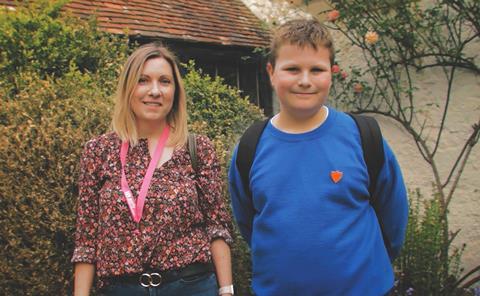
Charles was ten when relentless bullying began to take its toll. He was followed, pushed and mocked about his weight. He felt upset and angry but did not know where to put those feelings. After running home one day, he took his anger out on his sister. “Before I had coaching, I had no one to talk to about my feelings,” he says.
Through TLG Early Intervention, Charles was matched with Helen, a coach from a local church. Their sessions gave him a safe space to talk and helped him find healthier outlets for his anger and stress. Knowing that Charles loved drawing, Helen encouraged him to redraw difficult situations as cartoons and imagine how they might have unfolded differently. It was a simple, creative way for him to process what had happened and consider new responses.
Over time, Charles began to understand his emotions and see himself differently. The boy who had been afraid to meet new people because he assumed they would not like him was voted by his classmates to represent them on the school council. “I’m feeling happier about myself,” he says. “I actually have people that like me and support me.” He is now looking towards secondary school with excitement rather than only fear.
Charles’s story also shows why the Church’s role can extend beyond a programme. He and his family have started attending Helen’s church, where he continues to find community and encouragement. As Helen puts it, a year of coaching is not the end of Charles’s story; it is “almost the beginning”.
Statistics like 75,491 can feel overwhelming, but each number represents a child who needs someone to notice, listen and stay. The children’s mental health crisis will not be solved by churches alone, but churches can play a vital part when they are properly equipped. Together, TLG and local churches can reach children earlier, before challenges deepen into crisis, and make hope real through consistent, caring relationships.
To help equip local churches to provide caring relationships, practical support and lasting hope for children like Charles, give £17 a month and help make sure no child faces crisis alone.
Find out more and give today at tlg.org.uk/premier or call 01274 900373.