


Partner content
Wycliffe Bible Translators’ latest State of the Bible report shows the incredible progress in Bible translation over the last year – and what remains to be done
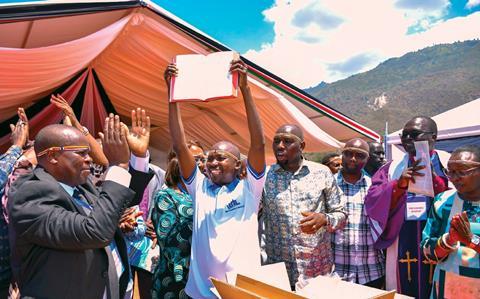
‘One day,’ said Edwyn Kiptinness, a Marakwet-speaking man in Kenya, ‘our people will be able to read God’s word in the language they understand best.’ Edwyn said that in 1962, when he was 16, as he struggled to understand the Bible he had been given during a long stay in hospital.
This year Edwyn’s dream came true.
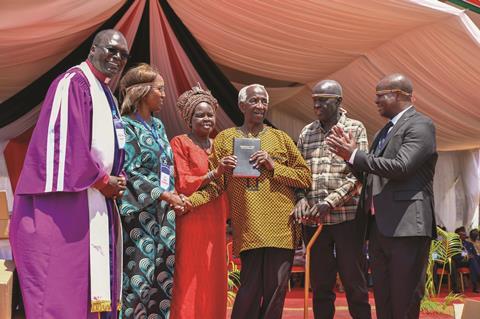
In August the Marakwet people danced and sang as they celebrated having the full Bible in their language for the first time.
Edwyn, who went on to play a role in building the work of Bible translation in Kenya, was presented with the Bible in the language of his heart. Now he, and all the Marakwet people, can understand the whole of God’s word in a way he couldn’t before.
Understanding God’s word
The Marakwet Bible is one of 28 full Bibles launched over the past year. That means a new translation of the whole Bible has been completed, on average, every two weeks.
An important milestone was also passed: the complete Bible was launched in its 800th language. There are now 807 languages, spoken by around 6.2 billion people, with the complete Bible.
Many of us have experienced how the Bible changes lives. Through the Bible God has changed us personally, and we have seen its power to transform people and churches.
But for the Bible to change lives, people need to be able to understand what God is saying through his word.
Yet 1 in 5 people – more than 1.5 billion people – still don’t have the Bible in their language. The message of hope, love and salvation contained in God’s word remains locked in languages they don’t understand – just as it once was for Edwyn.
But that is changing.
A year of extraordinary momentum
Wycliffe Bible Translators’ latest State of the Bible report shows remarkable progress towards a world where everyone can know Jesus through the Bible.
Alongside 28 full Bibles, 70 New Testaments were launched over the past year. That means a full Bible or New Testament was launched, on average, every four days.
Translation is now in progress in more than 4,414 languages – around 60% of all the languages in the world. And 87 languages received selections of Scripture for the first time. Speakers of those languages can now hear or read parts of God’s word in their own language – something they couldn’t do a year ago.
The number of languages still waiting for Bible translation to begin has also fallen dramatically. Today it stands at 543. Five years ago, it was 1,892 – a reduction from 25% of the world’s languages to just 7%.
This remarkable progress is the fruit of translation teams, churches and mission agencies working in partnership.
‘It is so wonderful to see the progress in Bible translation continue,’ says James Poole, Executive Director of Wycliffe Bible Translators. ‘But the numbers aren’t the goal. What matters is that more people can know Jesus through the Bible – and because of that lives, churches and communities are transformed.’
Unlocking God’s word for every heart
We live in an extraordinary moment in history. More people than ever before have the Bible in their language – and more Bible translation is in progress than ever before.
The generosity of churches and Christians across the UK and Ireland who give generously and pray consistently for Bible translation is a key reason why God’s word is being unlocked for more and more people.
But Bible translation is a means, not an end. It is about giving people the opportunity to hear God speak to them in the language they dream in, laugh in and cry in. It is about churches strengthened, disciples deepened and communities transformed. It is about unlocking eternal hope.
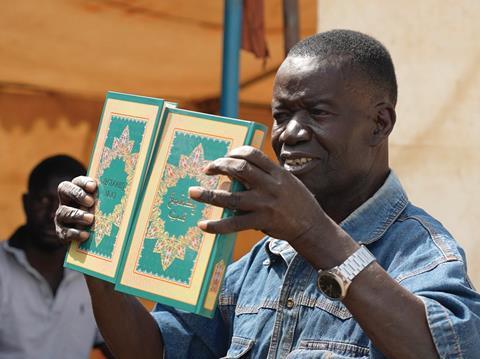
Bringing joy
On the other side of Africa from the Marakwet people, another celebration took place this year.
The Saafi-Saafi people of Senegal celebrated the completion of their New Testament – one of 70 launched over the past year.
Many Saafi-Saafi people do not speak French or Wolof, the main languages used in Senegal. Having the New Testament in their own language means they can encounter Jesus through the Bible in a new way.
‘It was not easy work,’ says Augustin, a member of the Saafi-Saafi Bible translation team, ‘but now we have reached a great milestone, and God has rewarded us with this New Testament in our own language.’
Having God’s word in their language will shape generations of Saafi-Saafi people to come.
François, a Saafi-Saafi teacher, said at the launch: ‘When the gospel reaches them in their language, you can imagine the joy it brings.’
As celebrations like those of the Marakwet and Saafi-Saafi people take place across the world, the vision of a world where everyone can know Jesus through the Bible moves closer to reality.
But 1 in 5 people are still waiting. So the work continues, until God’s word is unlocked for every heart.
Wycliffe Bible Translators’ State of the Bible report is full of statistics and stories from the past year. Read it at: wycliffe.org.uk/sotb